A small business website is often the first place potential customers go to learn about a company. A professional website helps visitors understand what your business offers, build trust, and take the next step toward contacting you or making a purchase.
But what pages should a small business website actually have?
You do not need dozens of pages to create an effective website. The right pages should provide essential information, answer customer questions, showcase your products or services, and make it easy for visitors to contact your business.
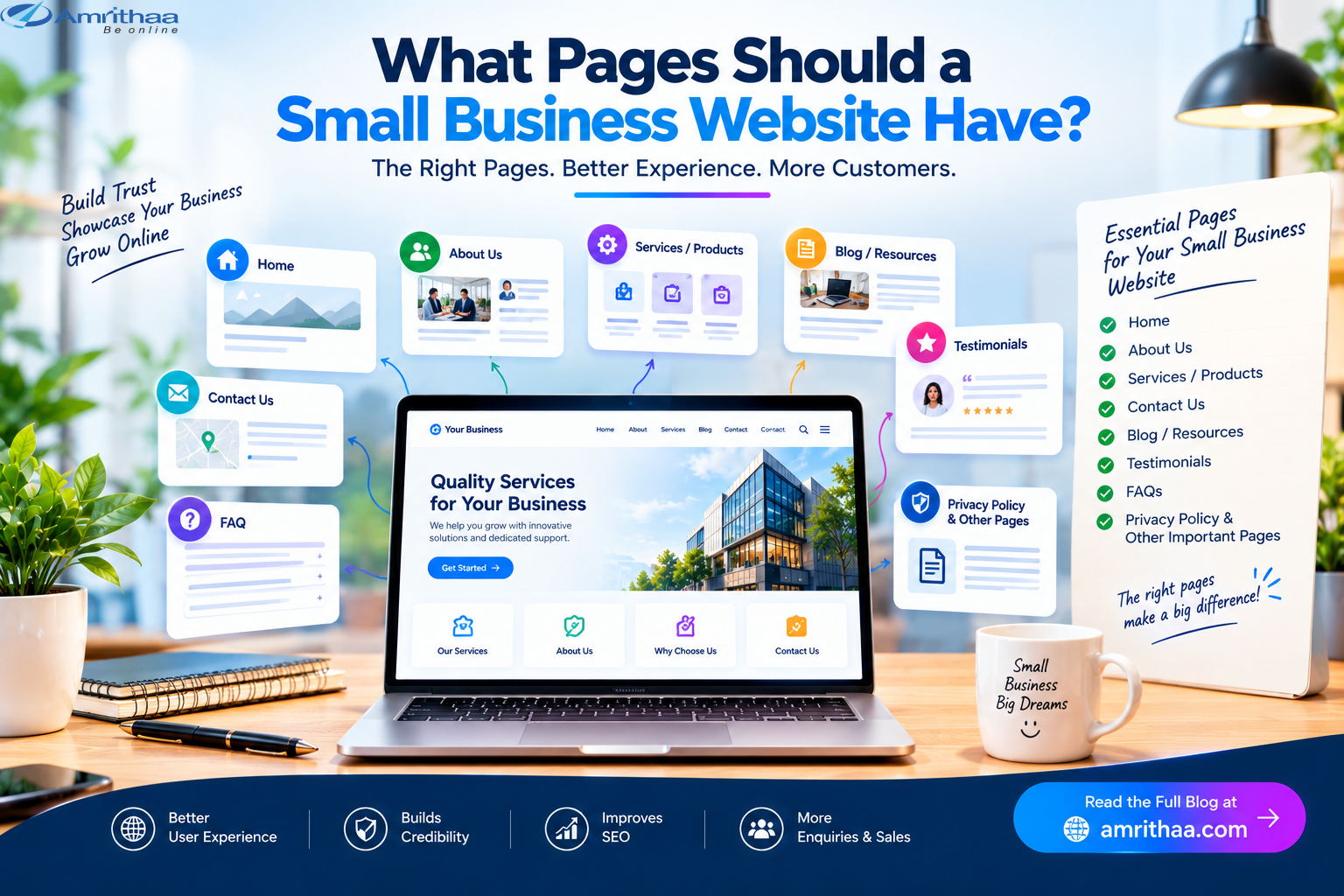
Here are the essential pages every small business website should consider.
The Home page is usually the first page visitors see, so it should immediately communicate who you are, what you offer, and why customers should choose your business.
A good Home page should include a clear headline, short description, key services or products, important benefits, customer reviews or testimonials, and strong calls-to-action.
Buttons such as “Get a Quote,” “Contact Us,” “Explore Services,” or “Shop Now” can guide visitors toward the next step.
Your Home page should also work well on mobile devices and load quickly.
The About Us page helps customers understand your business story, experience, values, and team.
People often want to know who they are doing business with before making a decision. This page gives you an opportunity to build credibility and create a stronger connection with your audience.
You can include your company background, mission, vision, experience, achievements, team information, and what makes your business different.
Keep the content genuine and easy to understand rather than making the page overly complicated.
Your Services or Products page explains exactly what your business provides.
If you offer multiple services, create separate sections or individual pages for each major service. This makes it easier for visitors to understand your offerings and can also help search engines understand what your business provides.
For example, a digital company may have pages for website development, mobile app development, digital marketing, eCommerce development, and custom software solutions.
Include clear descriptions, benefits, relevant images, and calls-to-action.
A Contact Us page is essential for generating enquiries.
Make it easy for visitors to reach you by including your phone number, email address, business location, contact form, business hours, and relevant social media links.
A simple and professional contact form can ask for basic information such as name, email, phone number, and enquiry details.
Avoid asking for unnecessary information. The easier it is to contact your business, the more likely visitors are to complete an enquiry.
A Blog page is not mandatory for every business, but it can be extremely useful for SEO and customer education.
Businesses can publish useful articles, guides, tips, FAQs, industry updates, case studies, and how-to content.
For example, amrithaa.com can use informative content to help businesses understand topics related to website development, digital marketing, automation, and other digital solutions.
Regularly publishing useful content can give your website more opportunities to appear in search results and bring organic visitors.
Customer reviews can help build trust with potential customers.
A dedicated Testimonials page can showcase positive experiences from existing customers. You can also display selected testimonials throughout your Home page and relevant service pages.
Whenever possible, include the customer’s name, company, project type, or other appropriate details to make the testimonial more credible.
Real customer experiences can help new visitors feel more confident about choosing your business.
A Frequently Asked Questions (FAQ) page answers common questions before customers need to contact you.
Questions can cover pricing, services, delivery timelines, payment options, support, processes, or other common concerns.
An FAQ page can save time for your team while helping visitors quickly find the information they need.
It can also support SEO by providing useful answers to questions people may search for online.
A professional business website should also include important legal and information pages where applicable.
These may include a Privacy Policy, Terms and Conditions, Refund Policy, Shipping Policy, or Cookie Policy, depending on the type of business and website.
These pages help explain how customer information is handled and what visitors can expect when using your website.
There is no fixed number of pages that every small business website must have.
A basic service-based business may start with five essential pages:
Home → About → Services → Blog → Contact
An eCommerce business may need additional pages such as Shop, Product Categories, Product Details, Cart, Checkout, My Account, Shipping Policy, and Returns.
The goal is not to create as many pages as possible. The goal is to provide the right information in a clear and organized way.
A successful small business website should make it easy for visitors to understand your business, trust your brand, explore your offerings, and contact you.
The most important pages are generally Home, About Us, Services or Products, Contact Us, and Blog or Resources, with additional pages such as Testimonials, FAQs, and legal policies depending on your business needs.
A well-planned website structure also creates a better user experience and provides a strong foundation for SEO and future growth.
If you are planning a new website or improving an existing one, amrithaa.com can help you create a professional, user-friendly digital presence designed around your business goals.
Ready to build a better business website? Visit amrithaa.com and explore professional website development solutions for your business.