Mobile applications have become an important part of everyday life and modern business. From online shopping and banking to education, healthcare and customer services, mobile apps help people access information and complete tasks quickly.
For businesses, developing a mobile application is an opportunity to connect with customers, improve services and create new digital experiences. However, building a successful app involves much more than writing code. It requires a structured process that starts with an idea and continues through planning, design, development, testing, launch and maintenance.
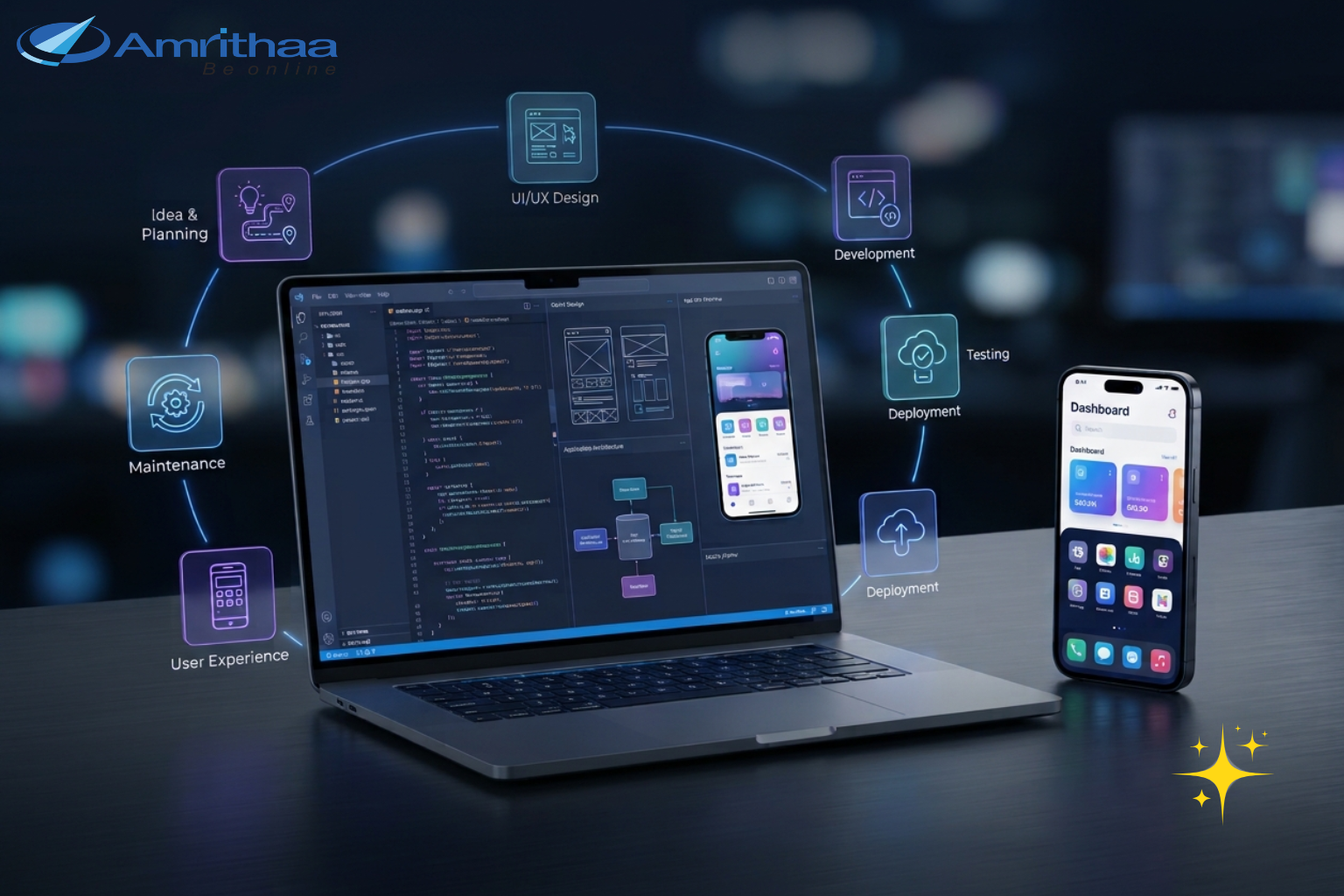
This complete process is known as the Mobile App Development Life Cycle.
Understanding each stage helps businesses plan their app projects, manage development costs and build applications that meet user expectations.
The Mobile App Development Life Cycle (MADLC) is a structured series of stages followed to plan, design, develop, test, launch and maintain a mobile application.
Each stage plays an important role in ensuring that the final application is functional, user-friendly, secure and reliable.
A typical mobile app development life cycle includes:
Following these stages helps development teams reduce errors, organize project activities and deliver better applications.
Every successful mobile application begins with a clear idea. Before starting development, businesses need to understand what problem the app will solve and who will use it.
During this stage, the development team gathers and evaluates project requirements.
Important questions include:
For example, an eCommerce business may need product browsing, shopping carts, online payments, order tracking and customer accounts.
Clear requirements provide a strong foundation for the entire project.
Once the requirements are understood, the next step is planning.
The team evaluates the technical requirements, development approach, project timeline and estimated budget.
This stage may include:
Businesses may also decide whether they need a native application, a cross-platform application or another suitable mobile solution.
Proper planning helps avoid unnecessary features, unexpected expenses and project delays.
The design stage focuses on how the application looks and how users interact with it.
UI (User Interface) refers to the visual elements, such as buttons, colours, typography, icons and screens.
UX (User Experience) focuses on how easily users can navigate the application and complete their tasks.
The design process generally includes:
Tools such as Figma are commonly used to create app designs and interactive prototypes before development begins.
A well-designed application should be visually appealing, easy to understand and convenient to use.
This is the stage where the approved designs and requirements are converted into a working application.
Developers build the frontend, backend and database components required for the app.
Frontend development: Creates the screens, buttons, navigation and user interactions.
Backend development: Handles business logic, server-side operations, user authentication and data processing.
Database development: Stores and manages information such as customer details, products, transactions and application records.
Depending on the project, developers may also integrate:
Regular communication between developers, designers and business owners helps ensure that the application follows the approved requirements.
Before launching an application, it must be tested carefully to identify and fix technical issues.
Testing helps ensure that the application works properly across supported devices, operating systems and screen sizes.
Common testing activities include:
Fixing issues before launch improves reliability and helps provide a better user experience.
After testing and approval, the application is prepared for release.
For Android applications, this may involve publishing through the Google Play Store. For iOS applications, developers prepare the app for submission to the Apple App Store.
The deployment process may include:
App store approval and publishing requirements should be considered during project planning, not only at the final stage.
Launching an application is not the end of the development process. Mobile applications need continuous monitoring and improvement.
After launch, developers may need to fix bugs, improve performance, update security measures and introduce new features.
Regular maintenance activities include:
Continuous improvement helps an application remain useful, secure and compatible as technology and customer expectations change.
Following a structured development life cycle offers several advantages for businesses.
Better project planning: Each stage has defined activities and objectives, making the project easier to manage.
Improved user experience: Research and design help create applications that meet user expectations.
Reduced development risks: Early planning and testing help identify potential problems before launch.
Better quality: Quality assurance ensures that the application is tested before reaching users.
Efficient resource management: A clear development process helps teams manage time, budget and technical resources.
Long-term reliability: Regular maintenance supports app performance and future improvements.
Building a successful mobile application requires the right combination of planning, design, technology and ongoing support.
At Amrithaa, we provide digital solutions to help businesses strengthen their online presence and improve their digital operations.
Our services include:
Whether you are planning your first mobile application or improving an existing digital platform, Amrithaa can help you explore the right development solution.
Visit https://www.amrithaa.com/ to learn more about our services.
The Mobile App Development Life Cycle provides a clear roadmap for transforming an idea into a successful mobile application. From requirement analysis and planning to design, development, testing, deployment and maintenance, every stage contributes to the quality of the final product.
For businesses, understanding this process makes it easier to plan projects, manage resources and build applications that deliver value to users.
Planning to develop a mobile application for your business? Take the next step towards digital growth with Amrithaa.
Visit: https://www.amrithaa.com/