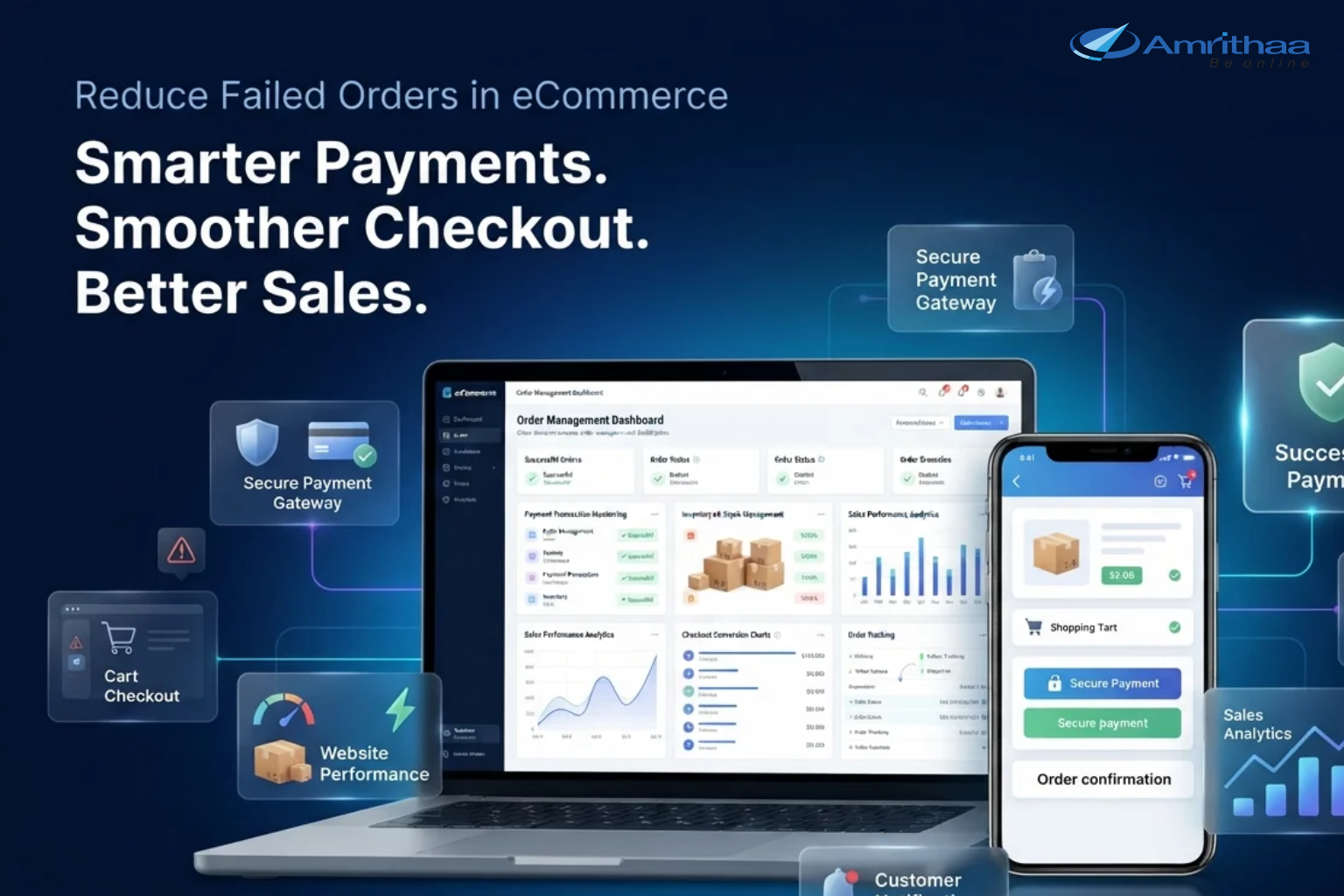
eCommerce has transformed the way businesses sell products and connect with customers. Customers can browse products, compare prices, add items to their shopping carts and place orders from their computers or smartphones.
However, not every order reaches successful completion. Customers may experience payment failures, checkout errors, unexpected delivery charges or technical problems while placing an order.
Failed orders can result in lost sales and negatively affect customer trust. If these problems happen frequently, businesses may also struggle with order management, customer support and operational efficiency.
The good news is that many failed orders can be reduced by improving website performance, simplifying checkout processes and implementing reliable order management systems.
In this article, let’s explore how eCommerce businesses can reduce failed orders and improve their overall shopping experience.
Before reducing failed orders, businesses need to understand why they happen.
Some common reasons include:
Identifying the actual cause helps businesses implement the right solutions instead of relying on guesswork.
Payment failures are a major concern for online stores. Customers may experience declined transactions, payment timeouts or interruptions while completing their purchases.
Businesses should integrate reliable payment gateways that support suitable payment methods and provide clear transaction responses.
Consider the following improvements:
For Indian eCommerce businesses, providing convenient payment options such as UPI and card payments can help improve checkout accessibility.
A complicated checkout process can cause customers to abandon their shopping carts before completing an order.
If customers are required to fill out too many fields or navigate several unnecessary pages, they may lose interest.
To improve the checkout experience:
A shorter and more convenient checkout process can help customers complete purchases with fewer difficulties.
Website speed directly affects the shopping experience. Slow-loading pages can frustrate customers, interrupt checkout activities and increase the chances of abandoned transactions.
Businesses should regularly review their website performance.
Important improvements include:
A fast and reliable eCommerce website makes it easier for customers to browse products and complete purchases.
Incorrect product information can create confusion and lead to unsuccessful orders.
For example, customers may purchase products that are no longer available or receive incorrect information about pricing and delivery.
Businesses should maintain accurate product and inventory records.
Useful practices include:
Accurate product information helps avoid unnecessary order cancellations and improves customer confidence.
Many customers browse and purchase products using smartphones. If an online store does not work properly on mobile devices, customers may face difficulties during checkout.
Businesses should ensure that their eCommerce websites are mobile-friendly.
Important considerations include:
Testing the complete shopping process on different mobile devices helps identify problems before customers encounter them.
Customers should understand what happened when an order or payment fails.
Displaying generic error messages can create confusion and lead customers to repeat transactions unnecessarily.
Instead, businesses should provide clear guidance.
For example:
Businesses should also verify payment status with the payment provider before asking customers to make another payment. This helps prevent duplicate charges.
Customers want confirmation after placing an order. Without proper communication, they may become uncertain about whether their purchase was successful.
Automated notifications help businesses keep customers informed.
Useful notifications include:
WhatsApp communication can also be used where appropriate, with customer consent and suitable messaging practices.
Clear communication reduces confusion and helps businesses manage customer expectations.
Businesses should regularly review order data to identify patterns and understand why transactions fail.
Important metrics to monitor include:
For example, if many payment failures happen through one payment method, businesses can investigate the gateway integration or contact the payment provider.
Regular reporting helps identify recurring problems and supports better business decisions.
Managing eCommerce orders manually can become difficult as the business grows.
An effective order management system helps businesses organise order information and monitor each stage of the purchasing process.
Useful capabilities include:
A properly integrated order management system helps reduce manual errors and makes daily operations easier to manage.
Even after an online store is launched, regular testing is important.
Website updates, plugin changes, payment gateway modifications and server issues can affect the checkout process.
Businesses should periodically test:
Testing the complete order journey helps identify problems before they affect a large number of customers.
Reducing failed orders requires a combination of reliable technology, user-friendly design and effective business processes.
At Amrithaa, we provide digital solutions that help businesses build, manage and improve their online platforms.
Our services include:
eCommerce Solutions: Develop online stores with product management, shopping cart functionality, payment integration and order management capabilities.
Website Development: Build responsive and professional websites that provide convenient shopping experiences.
Mobile App Development: Create mobile applications that help businesses connect with customers and offer convenient digital services.
BPM Applications: Improve business workflows and operational processes through customised business process management solutions.
Digital Marketing: Help businesses improve online visibility and reach potential customers through digital campaigns.
Website and App Maintenance: Provide ongoing technical support, troubleshooting, updates and performance improvements.
Whether you are launching a new online store or improving an existing eCommerce platform, Amrithaa can help you explore the right digital solutions.
Visit https://www.amrithaa.com/ to learn more about our services.
Failed orders can affect eCommerce revenue, customer satisfaction and business operations. However, businesses can reduce these issues by choosing reliable payment gateways, simplifying checkout processes, improving website speed and maintaining accurate product information.
Regular testing, automated notifications and proper order management also help create a smoother purchasing experience.
The goal is not simply to attract more visitors but to make it easier for customers to complete their purchases successfully.
Planning to improve your online store? Take the next step towards better eCommerce performance with Amrithaa.
Visit: https://www.amrithaa.com/