Developing a mobile app is an exciting step for any business looking to reach more customers, improve services, or streamline operations. However, one of the first questions business owners ask is: how long does it take to develop a mobile app?
The answer depends on several factors, including app complexity, features, design, technology, integrations, and testing requirements. A simple app may take a few weeks to develop, while a complex business application can require several months or longer.
Understanding the development process helps businesses set realistic expectations, plan budgets, and prepare for a successful launch.
Every mobile app has different requirements. The development timeline depends on what the app needs to accomplish and how users will interact with it.
App complexity: An app with basic information pages and simple features generally takes less time than an app with user accounts, payment processing, live tracking, or real-time communication.
Number of features: Features such as push notifications, booking systems, dashboards, chat, payment gateways, and third-party integrations can increase development time.
Design and user experience: A clear, user-friendly interface helps users navigate the app easily. Custom animations, complex layouts, and detailed prototypes may require additional design time.
Platform selection: Developing for Android, iOS, or both affects planning and implementation. Cross-platform frameworks may allow teams to share some code, but platform-specific testing and adjustments are still necessary.
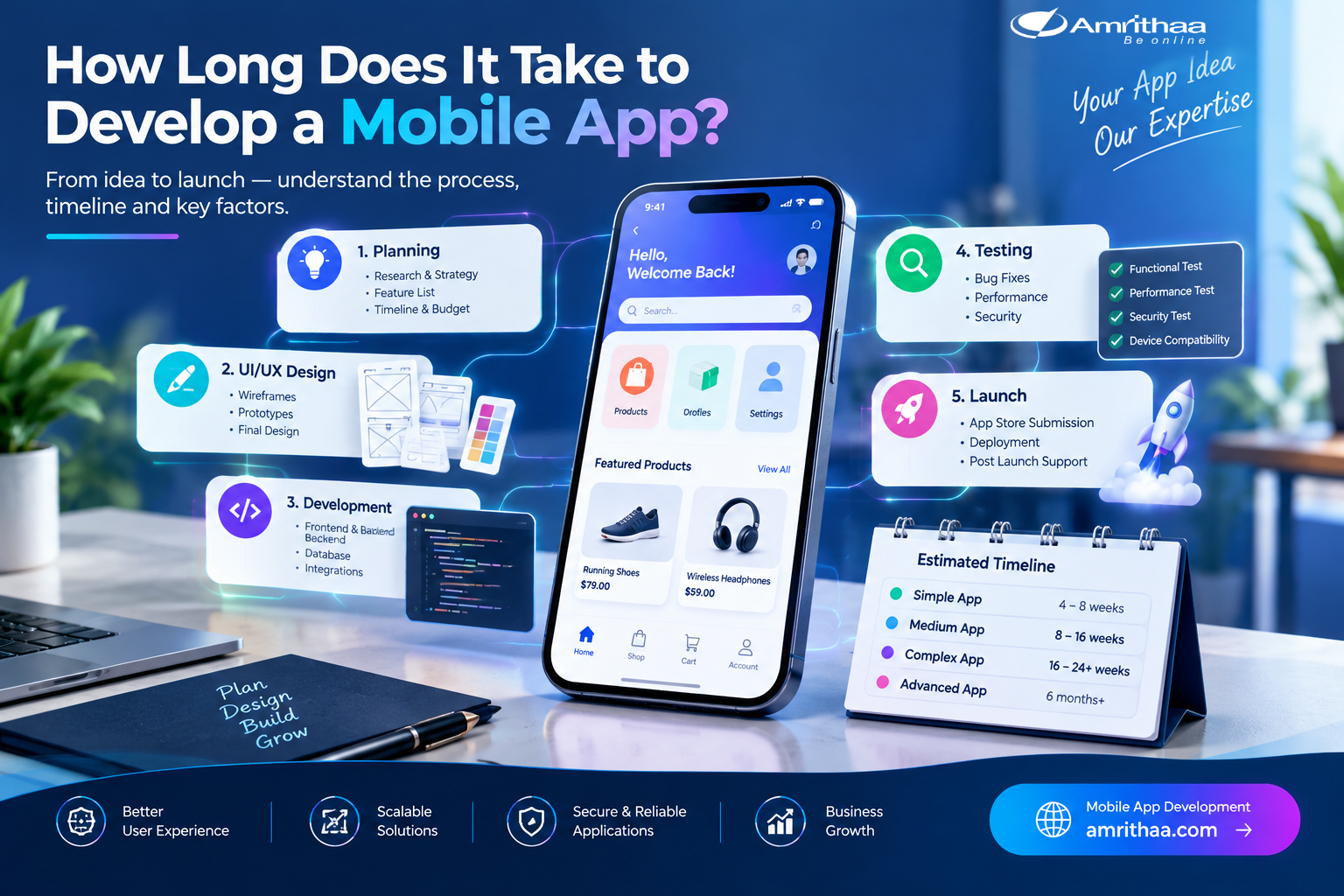
Although every project is different, the following estimates can help businesses understand a typical development schedule.
| App Type | Estimated Development Time |
| Simple app | 4–8 weeks |
| Medium-complexity app | 8–16 weeks |
| Complex business app | 16–24+ weeks |
| Large platform or advanced application | 6 months or longer |
These are general estimates, not guaranteed delivery dates. The timeline may change depending on the team’s experience, project requirements, feedback cycles, integrations, and approval processes.
The first stage is defining the app’s purpose, target audience, core features, and business goals. The team reviews requirements and decides which features are essential for the first release.
This stage may take around one to two weeks for a straightforward project, although larger applications need more detailed planning.
Designers create user flows, wireframes, and interface mockups to show how the app will look and work.
This stage often takes one to three weeks for a small or medium project. Complex apps may require more time for prototyping and usability feedback.
Developers build the app’s interface, backend, database, integrations, and core functionality.
For many projects, development takes several weeks to a few months. The exact duration depends on feature complexity, platform requirements, and whether existing systems need to be connected.
Before launch, the app must be tested for bugs, performance issues, security concerns, device compatibility, and usability.
Testing may take one to three weeks or longer, depending on the app’s size and complexity. Fixing issues discovered during testing can extend the timeline.
The final stage includes preparing the production environment, configuring app store listings where applicable, and submitting the app for review.
Allow time for final checks and potential app store review or approval delays. A launch date should include some flexibility for unexpected issues.
Businesses can help keep their projects on schedule by making clear decisions early and focusing on essential features.
Start with a minimum viable product (MVP): Launch with the most important features first. Additional functionality can be introduced after gathering feedback from real users.
Prepare clear requirements: A detailed feature list reduces confusion and limits unnecessary changes during development.
Finalize designs early: Approving wireframes and interface designs before development can reduce rework.
Provide timely feedback: Delayed approvals, content, or decisions can slow down the project.
Choose suitable technology: Select a development approach based on your features, budget, performance needs, and long-term plans.
Launching an app quickly is useful only if the app works reliably. Rushing development can lead to bugs, poor usability, security weaknesses, and expensive fixes after launch.
A well-planned project balances delivery time with performance, accessibility, security, and user experience.
Businesses should also plan for maintenance, updates, operating system changes, and future improvements. App development does not end when the first version is released.
At amrithaa.com, businesses can explore digital solutions and mobile app development services that support their goals and long-term growth.
So, how long does it take to develop a mobile app? A simple app may take around four to eight weeks, a medium-complexity app around eight to sixteen weeks, and a complex application several months or longer.
The most accurate timeline comes from evaluating the app’s features, design, technology, integrations, and testing requirements before development begins.
With clear planning and the right development strategy, businesses can build a useful mobile app without losing sight of quality or their business goals.
Ready to turn your app idea into reality? Visit amrithaa.com to explore mobile app development solutions for your business.