Mobile applications have become an important part of modern business. Customers increasingly use smartphones to explore products, book services, make payments, communicate with companies and manage their everyday activities.
For businesses, having a mobile application creates new opportunities to connect with customers, improve service accessibility and strengthen their digital presence. However, developing an app is not just about creating attractive screens. It is important to include features that provide real value to users and support business objectives.
Whether you are planning an eCommerce app, a service booking application or a customer management platform, choosing the right features is essential.
In this article, we explore the important features every business should consider when developing a mobile application.
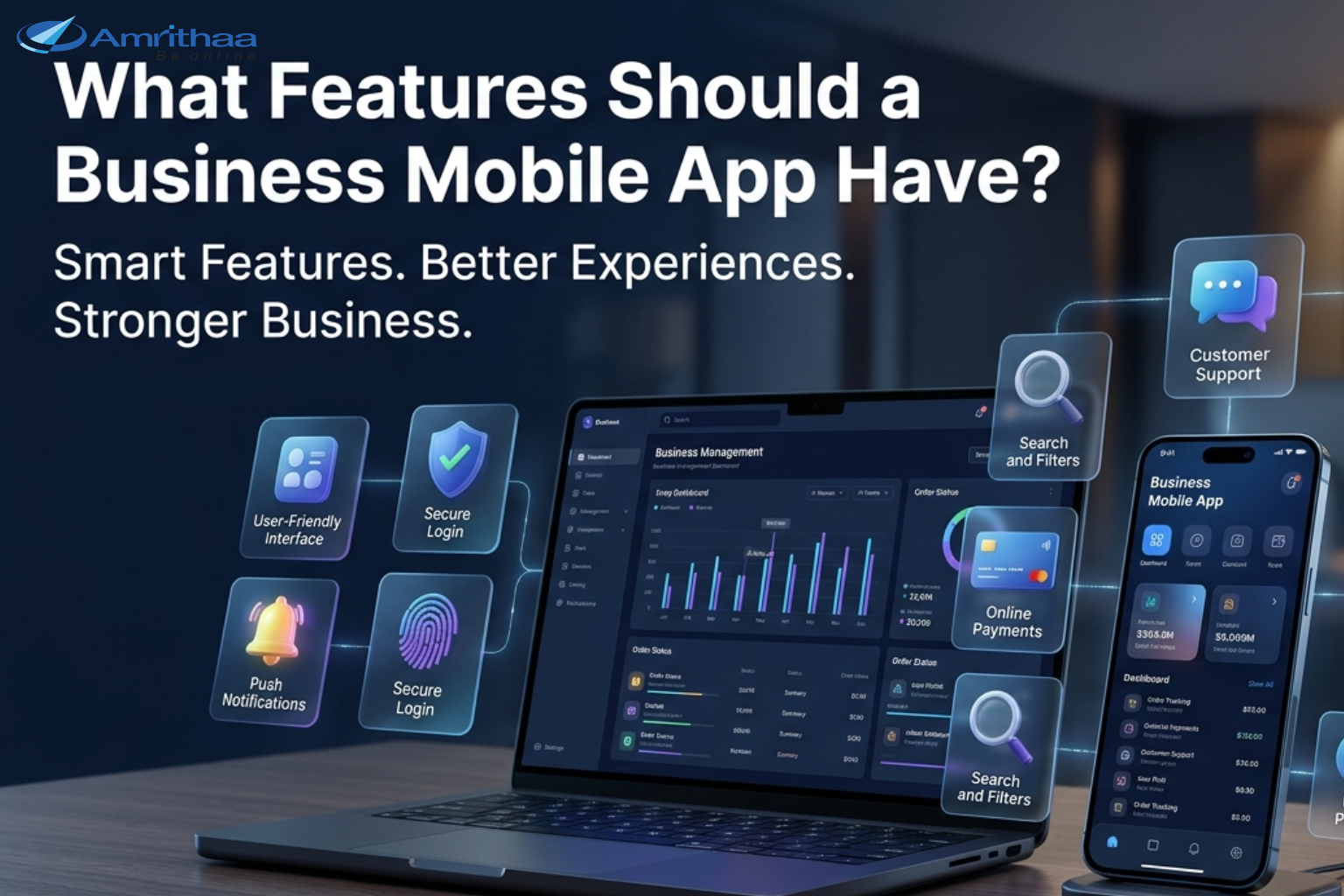
A simple and attractive user interface is one of the most important features of a successful business mobile app.
Users should be able to understand the application and find what they need without confusion. Complicated menus, unnecessary steps and crowded screens can make users leave the app.
A good mobile app interface should include:
A well-designed user experience encourages customers to explore the application and interact with the business.
User registration and login allow customers to create personal accounts and access customised services.
Depending on the application’s purpose, businesses can provide different login options, such as:
Security should be considered throughout the authentication process. Sensitive information must be handled carefully, and access should be protected through suitable security measures.
Push notifications help businesses communicate important information directly to users through their mobile devices.
They can be used to share updates, reminders, announcements and promotional messages.
Common uses include:
Notifications should be relevant, timely and useful. Businesses should also respect user preferences and provide appropriate notification controls.
For businesses offering products or services, the application should make information easy to find.
An eCommerce application may require product images, descriptions, prices, categories and availability details. A service-based application may need service descriptions, pricing information, booking options and contact details.
Useful features include:
Clear information helps customers understand what the business offers and make informed decisions.
For applications that support purchases or paid services, secure payment integration is an important feature.
Customers should be able to complete transactions conveniently without unnecessary steps.
Depending on the business and payment provider, available options may include:
The app should also provide clear payment confirmations, transaction records and appropriate error messages.
Businesses should select a reliable payment gateway and follow applicable security and compliance requirements.
When an application contains many products, services or categories, users need an easy way to find specific information.
A search feature helps customers locate what they are looking for quickly.
Useful search capabilities include:
For an eCommerce app, these features can make product discovery easier and improve the shopping experience.
Customers may need assistance while using an application. Providing accessible support options helps businesses respond to questions and resolve issues.
Useful customer communication features include:
An effective support system helps businesses maintain customer relationships and provide better service.
For eCommerce, delivery, appointment and service-based businesses, booking and tracking features can improve convenience.
Customers should be able to view the status of their orders or bookings without contacting the business repeatedly.
Depending on the application, features may include:
These capabilities help customers stay informed and allow businesses to manage transactions more efficiently.
A user profile gives customers control over their personal information and application preferences.
A useful account management section may include:
Giving users control over their accounts creates a more convenient and personalised application experience.
A mobile app should not only support customers. Businesses also need an effective way to manage application activities.
An admin dashboard allows authorised staff to manage information and monitor important operations.
Depending on business requirements, it may provide:
A well-organised dashboard helps business owners monitor activities and make informed decisions.
Application performance and security are essential for building customer trust.
A slow application or frequent technical issues can affect user satisfaction. Similarly, poor data protection can create serious risks for both customers and businesses.
Important considerations include:
Businesses should also follow applicable privacy laws and clearly communicate how user data is collected and used.
Analytics help businesses understand how customers use their applications.
By monitoring relevant activity, businesses can identify popular features, understand user behaviour and improve their services.
Useful analytics may include:
These insights can support better business planning and future application improvements.
Not every mobile application needs every available feature. The right combination depends on the business model, target audience and project objectives.
Before starting development, consider the following:
Identify your business goals: Decide whether the app is intended to increase sales, manage bookings, improve communication or support internal operations.
Understand your customers: Research what your target audience expects from the application.
Prioritise essential features: Start with the features that solve the most important customer and business problems.
Plan your budget: Consider development, hosting, integrations, maintenance and future improvements.
Focus on scalability: Choose an architecture that can support additional features and users as the business grows.
Test before launch: Check usability, performance, security and compatibility before releasing the app.
Starting with a focused set of essential features can help businesses launch efficiently and expand the application based on real user feedback.
A successful mobile application requires thoughtful planning, user-friendly design, reliable development and ongoing technical support.
At Amrithaa, we provide digital solutions that help businesses improve their online presence and build effective digital experiences.
Our services include:
Whether you are planning a new business application or upgrading an existing one, Amrithaa can help you explore suitable digital solutions.
Visit https://www.amrithaa.com/ to learn more about our services.
A successful business mobile app combines useful features, simple navigation, secure functionality and reliable performance. From user registration and push