For small businesses, attracting new customers online is essential for long-term growth. However, with limited marketing budgets, choosing the right digital marketing strategy can be challenging. Two popular options are Search Engine Optimization (SEO) and Google Ads.
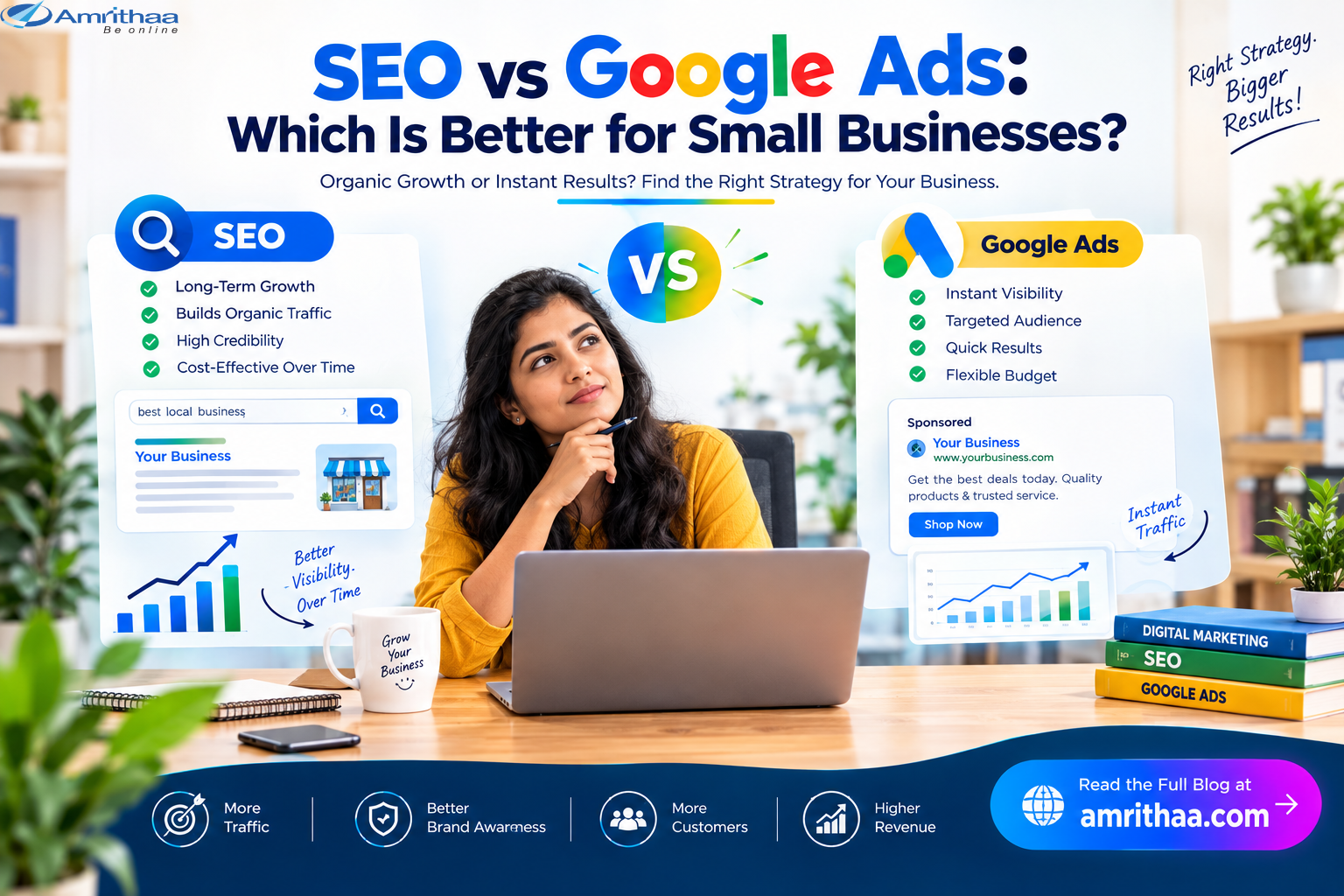
Both strategies help businesses reach people searching for products or services online, but they work in different ways. SEO focuses on improving organic search visibility, while Google Ads helps businesses appear in paid search placements.
So, SEO vs Google Ads: Which Is Better for Small Businesses? The answer depends on your business goals, budget, competition, and how quickly you want to generate results.
Search Engine Optimization (SEO) is the process of improving your website so it can appear more prominently in unpaid search engine results.
SEO includes keyword research, useful website content, technical improvements, mobile optimization, page speed, and building relevant website authority.
For example, a small web development company can publish helpful articles about website design, eCommerce solutions, and mobile app development. When these pages match what potential customers are searching for, they may attract visitors through organic search.
Benefits of SEO:
However, SEO takes time. Results depend on competition, website quality, content relevance, and other factors. It is best viewed as a long-term investment rather than a quick solution.
Google Ads is an online advertising platform that allows businesses to promote their products and services across eligible Google advertising placements, including search results.
Businesses can create campaigns targeting specific keywords, locations, audiences, and customer needs. Depending on the campaign type and targeting, ads may appear when potential customers search for relevant services.
For example, a local business offering website development could run search ads targeting people looking for website developers in its service area.
Benefits of Google Ads:
Google Ads requires ongoing budget management. Traffic typically decreases when campaigns stop, and competitive keywords can be expensive. Businesses should monitor conversions and customer acquisition costs instead of focusing only on clicks.
| Factor | SEO | Google Ads |
| Traffic type | Organic search | Paid advertising |
| Cost model | Investment in optimization and content | Usually pay per click or another campaign-specific model |
| Time to results | Generally takes longer | Visibility can begin soon after launch |
| Long-term value | Can build lasting organic visibility | Depends on ongoing campaigns and budget |
| Targeting | Based on search intent, content, and relevance | Offers campaign-specific targeting options |
| Budget control | No direct payment for organic clicks | Budget and bids can be managed |
| Best suited for | Sustainable organic growth | Faster visibility and targeted campaigns |
Neither strategy is automatically better for every business. The right choice depends on what you want to achieve and the resources available to you.
SEO may be the right choice if your business wants to build a long-term online presence and attract customers through organic search.
It is particularly useful when you can consistently publish helpful content, improve your website, and invest time in optimizing important service pages.
For example, a business that offers digital marketing, software development, or professional services can use SEO to answer customer questions and attract visitors who are researching solutions.
SEO can also support local visibility through relevant location-based content and a well-maintained Google Business Profile.
Remember that organic rankings are not guaranteed. Consistent improvements and regular performance reviews are important for sustainable growth.
Google Ads may be a better fit when your business needs faster exposure, wants to promote a new service, or has a time-sensitive sales target.
It can also help businesses test which search terms attract qualified enquiries before investing more heavily in long-term content strategies.
However, successful campaigns require careful keyword selection, relevant landing pages, conversion tracking, and ongoing optimization.
Before increasing your budget, measure the quality of leads, the number of conversions, and the cost of acquiring each customer. A campaign that generates many clicks but few enquiries may need improvement.
Yes. For many small businesses, combining SEO and Google Ads can create a balanced digital marketing strategy.
Google Ads can help attract targeted traffic while your SEO efforts gradually improve organic visibility. Campaign data can also reveal which keywords and messages are worth exploring in future website content.
For example, you could use Google Ads to promote a high-priority service while publishing SEO-focused blogs and improving your service pages to build organic traffic over time.
Track both channels separately and compare their contribution to qualified leads, sales, and overall business goals.
At amrithaa.com, businesses can explore website development and digital solutions that support their online presence and growth objectives.
So, SEO vs Google Ads: Which Is Better for Small Businesses?
SEO is often a strong choice for long-term organic visibility, while Google Ads can help businesses gain paid visibility more quickly. The best approach depends on your goals, timeline, competition, and available budget.
If resources allow, combining both strategies can help your business pursue short-term opportunities while building a stronger foundation for future growth.
The key is to focus on qualified traffic, useful content, a well-optimized website, and measurable business results—not just website visits.
Ready to improve your online visibility? Visit amrithaa.com to explore website development and digital marketing solutions for your business.