PROFESSIONAL IT SERVICE & SOLUTIONS IN INDIA

PROFESSIONAL IT SERVICE & SOLUTIONS IN INDIA

Logo Final Amrithaa 1536x286 (1)
Call Anytime 24/7


Mail Us For Support

 
Office Address

Restaurant Website Development: Complete Beginner’s Guide

Restaurant Website Development Complete Beginner’s Guide

In today’s digital-first world, a restaurant website is no longer optional. Whether you run a small café, fine-dining restaurant, cloud kitchen, or restaurant chain, your website serves as the digital front door to your business. Customers expect to browse menus, reserve tables, place online orders, and interact with your brand effortlessly.

If you’re planning a restaurant website, understanding the development process, team requirements, MVP features, worker management, and client management workflows is essential. This Restaurant Website Development: Complete Beginner’s Guide will walk you through everything you need to know.

Why Every Restaurant Needs a Website

A professional restaurant website helps you:

  • Increase online visibility
  • Accept reservations 24/7
  • Showcase menus and offers
  • Enable online ordering
  • Improve customer engagement
  • Build trust and credibility

According to digital experts at amrithaa.com, restaurants with a strong online presence often attract more customers and generate higher repeat business.

Phase 1: Business Planning & Requirements Gathering

Before development begins, define your business goals.

Key questions include:

  • Do you need table reservations?
  • Will you offer online ordering?
  • Do you need delivery tracking?
  • Will customers pay online?
  • Do you need loyalty programs?

Project Deliverables

  • Business requirement document
  • Competitor analysis
  • User flow mapping
  • Feature planning
  • Development roadmap

Phase 2: MVP Development (Minimum Viable Product)

For beginners, launching an MVP helps reduce costs while validating business demand.

Essential MVP Features

Customer Side

  • Homepage
  • Restaurant information
  • Digital menu
  • Online reservations
  • Contact form
  • Google Maps integration
  • Mobile-friendly design

Admin Side

  • Reservation management
  • Menu management
  • Customer database
  • Basic analytics

Phase 3: Advanced Restaurant Features

After validating the MVP, you can expand functionality.

Online Food Ordering System

  • Cart management
  • Secure checkout
  • Payment gateway integration

Delivery Management

  • Order tracking
  • Driver assignment
  • Delivery notifications

Customer Loyalty Program

  • Reward points
  • Coupons
  • Membership benefits

CRM Integration

  • Customer history
  • Marketing automation
  • Personalized offers

Businesses working with amrithaa.com often scale gradually by launching an MVP first and adding advanced modules later.

How to Manage Restaurant Workers Digitally

Managing workers efficiently is essential for restaurant success.

Staff Management Features

Employee Dashboard

  • Attendance tracking
  • Shift scheduling
  • Leave requests

Kitchen Management

  • Order queue tracking
  • Preparation status
  • Task assignments

Delivery Staff Management

  • Delivery assignments
  • GPS tracking
  • Delivery performance reports

Worker Workflow

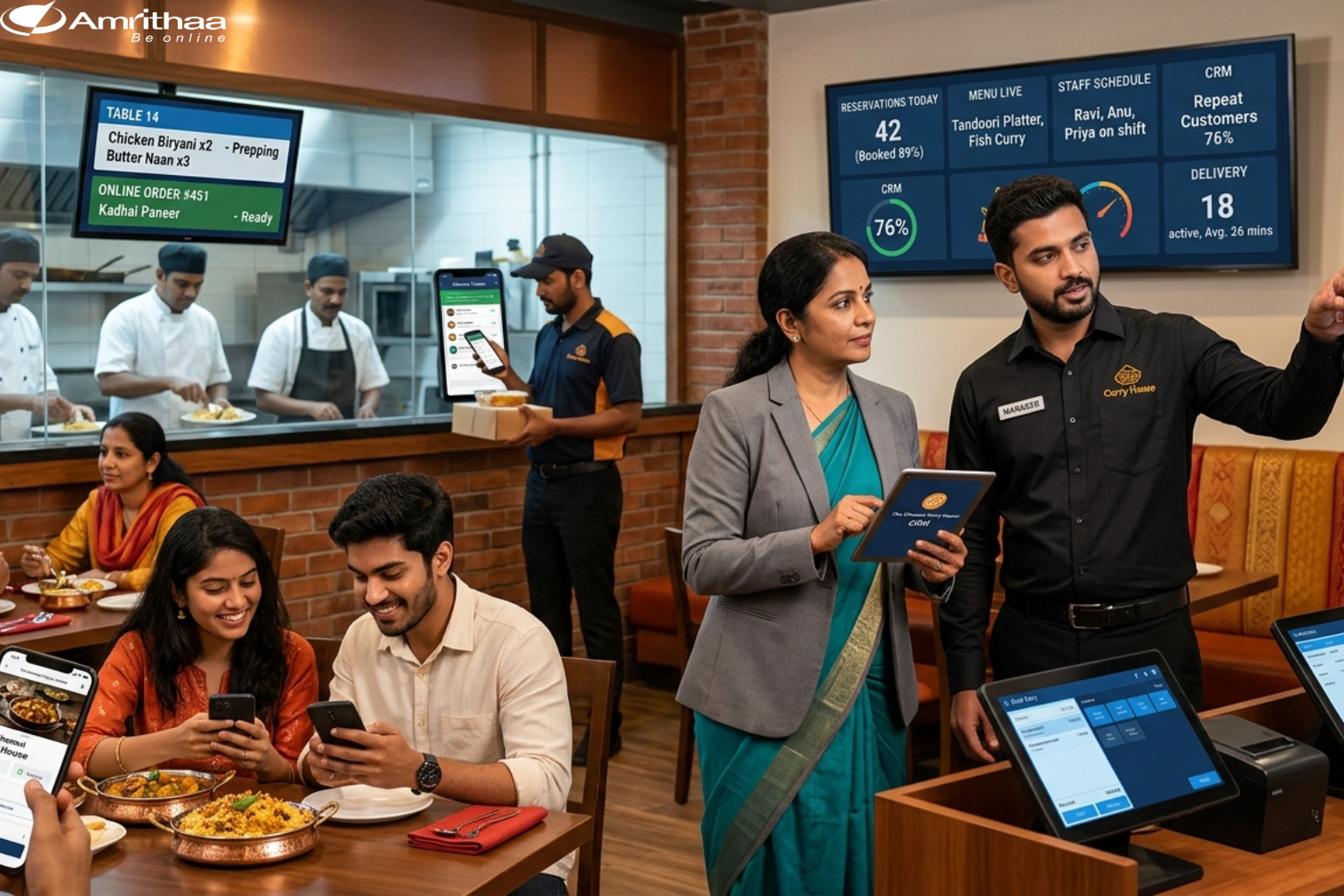
  1. Customer places order
  2. Kitchen receives notification
  3. Staff prepares order
  4. Delivery executive receives assignment
  5. Customer receives updates

This process reduces operational delays and improves customer satisfaction.

How to Manage Customers Efficiently

Customer management is one of the biggest advantages of restaurant websites.

Customer Management Features

  • Customer profiles
  • Order history
  • Reservation history
  • Feedback collection
  • Loyalty rewards

Customer Lifecycle Process

Step 1: Visitor

Customer visits website.

Step 2: Lead

Customer books a table or submits inquiry.

Step 3: Customer

Customer places an order or visits restaurant.

Step 4: Repeat Customer

Marketing campaigns encourage repeat visits.

Step 5: Loyal Customer

Reward programs increase retention.

A good CRM system helps automate this entire process.

Development Milestones

Milestone 1

Planning & Requirements

Duration: 1 Week

Milestone 2

UI/UX Design

Duration: 1–2 Weeks

Milestone 3

Frontend Development

Duration: 2–3 Weeks

Milestone 4

Backend Development

Duration: 2–4 Weeks

Milestone 5

Testing & Quality Assurance

Duration: 1 Week

Milestone 6

Deployment & Launch

Duration: 3–5 Days

Total Project Duration

Basic Website: 4–6 Weeks

Advanced Restaurant Platform: 8–16 Weeks

Restaurant Website Cost Factors

Development costs depend on:

  • Number of features
  • Custom design requirements
  • Mobile app integration
  • Delivery management
  • CRM implementation
  • Third-party integrations

Cost Influencing Factors

  • MVP vs Full Product
  • Team size
  • Technology stack
  • Scalability requirements
  • Security requirements

The best approach is to begin with an MVP and scale based on customer demand.

Conclusion

A successful restaurant website is more than just an online menu. It becomes a complete business management platform that handles reservations, customer engagement, staff operations, online orders, and marketing automation.

By following a structured development process, creating an MVP first, and implementing proper worker and client management systems, restaurants can significantly improve operational efficiency and customer satisfaction.

Whether you’re launching a new restaurant, upgrading an existing website, or planning a large-scale restaurant platform, amrithaa.com can help you evaluate business models, define MVP requirements, estimate development costs, build scalable solutions, and create a complete digital roadmap tailored to your restaurant business.

👉 Ready to build your restaurant website? Contact amrithaa.com today for complete consulting, business planning, and development guidance.

Relatetd Post

0 0 votes
Article Rating
Subscribe
Notify of
guest

0 Comments
Oldest
Newest Most Voted
Inline Feedbacks
View all comments
0
Would love your thoughts, please comment.x
()
x