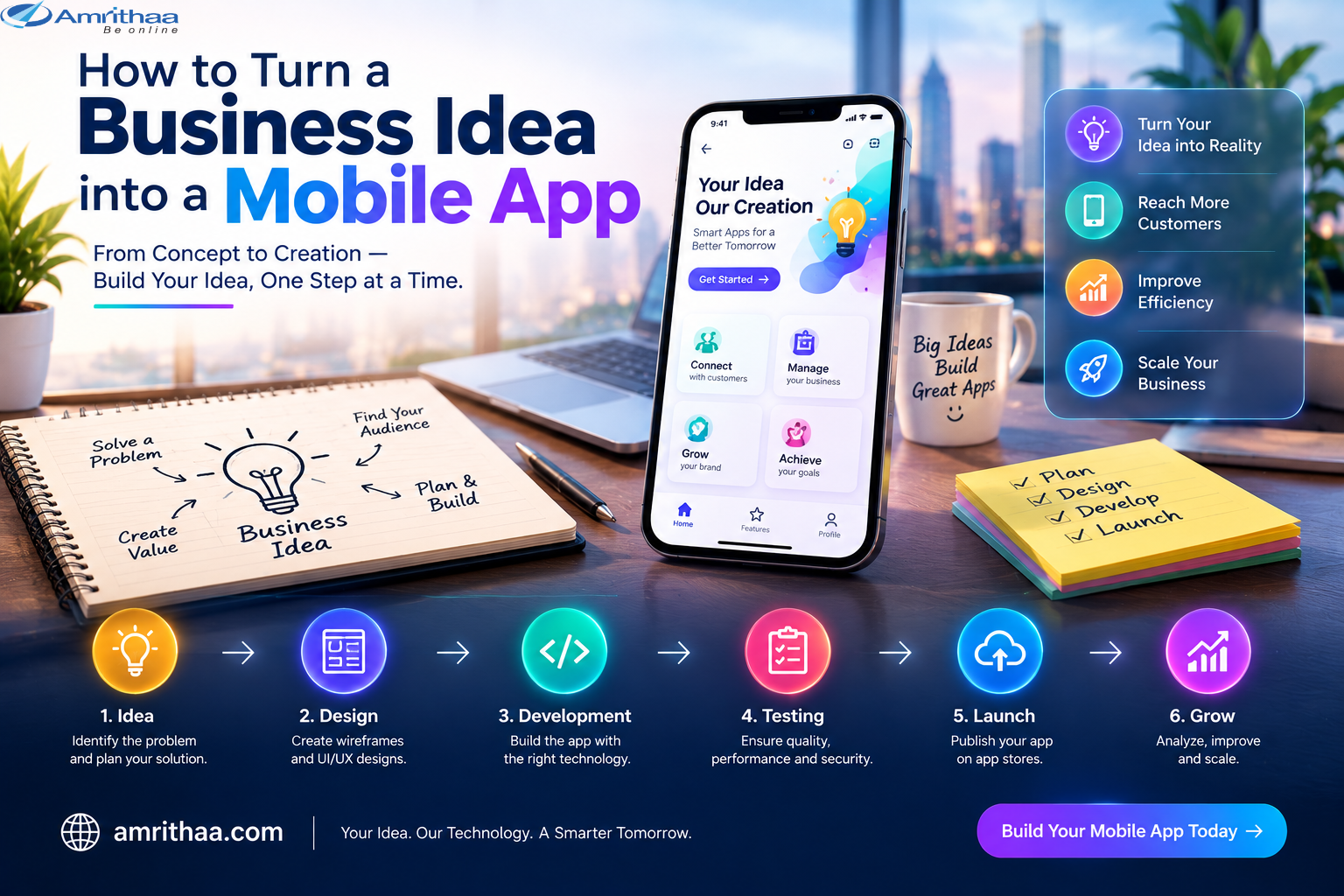
Many successful mobile apps begin with a simple business idea: solving a customer problem, making a process easier, or providing a better digital experience. However, turning an idea into a successful mobile app requires more than simply developing an application.
You need to understand your target audience, define the right features, choose suitable technology, design a user-friendly interface, test the product, and continuously improve it after launch.
So, how do you turn a business idea into a mobile app? Let’s explore the important steps involved.
Every successful app starts with a clear purpose. Before thinking about design or development, identify the problem your app will solve.
Ask yourself:
Understanding your target audience is equally important. Research customer needs, existing solutions, competitors, and market opportunities.
A clear idea helps create a focused app instead of trying to include too many features from the beginning.
Once the business idea is clear, list the features required to deliver the main value of the app.
For example, a business app might require:
Instead of building every possible feature immediately, consider creating a Minimum Viable Product (MVP).
An MVP includes the essential features needed to launch the initial version, collect user feedback, and understand what customers actually need.
This approach can help businesses validate an idea before investing heavily in advanced features.
Good app design should make it easy for users to understand what to do next.
Start by creating wireframes that show the basic structure of each screen. Then develop the UI design with appropriate colors, typography, icons, navigation, buttons, and visual elements.
The app should be designed for different screen sizes and devices.
Important areas include:
A well-designed user experience can make the difference between an app that users enjoy and one they quickly abandon.
Technology selection depends on the type of app, target platforms, budget, required features, performance expectations, and future scalability.
Businesses may choose native development for specific platforms or cross-platform technologies when they want to build for multiple platforms efficiently.
The development process may include:
UI/UX Design → Frontend Development → Backend Development → API Integration → Database → Testing
The backend manages important operations such as user accounts, data, payments, notifications, and business logic.
At amrithaa.com, businesses can explore digital solutions including mobile application development designed around specific business requirements.
Testing is an essential stage of mobile app development.
Before launching the application, test important functions across different devices and screen sizes. Check registration, login, payments, forms, notifications, navigation, API connections, and other critical features.
Testing should also consider:
Fixing issues before launch helps create a smoother experience for early users.
Launching the app is not the final step. It is the beginning of the next stage.
After launch, monitor how users interact with the application. Analytics can help identify popular features, user drop-off points, engagement patterns, and areas that need improvement.
Collect customer feedback and use it to plan future updates.
Regular updates can introduce new features, improve performance, strengthen security, and address changing customer expectations.
A successful app should evolve as the business and its users grow.
How to turn a business idea into a mobile app? Start with a clear problem, understand your customers, define essential features, design a simple user experience, select the right technology, test thoroughly, and continuously improve after launch.
A mobile app can become a powerful digital channel for customer engagement, sales, service delivery, and business growth when it is built around a genuine customer need.
The key is to start with the business goal rather than technology alone.
For businesses looking to transform ideas into digital products, amrithaa.com provides modern website, mobile application, software, and digital solutions.
👉 Turn your idea into a digital product with the right strategy and technology. Visit amrithaa.com to get started.