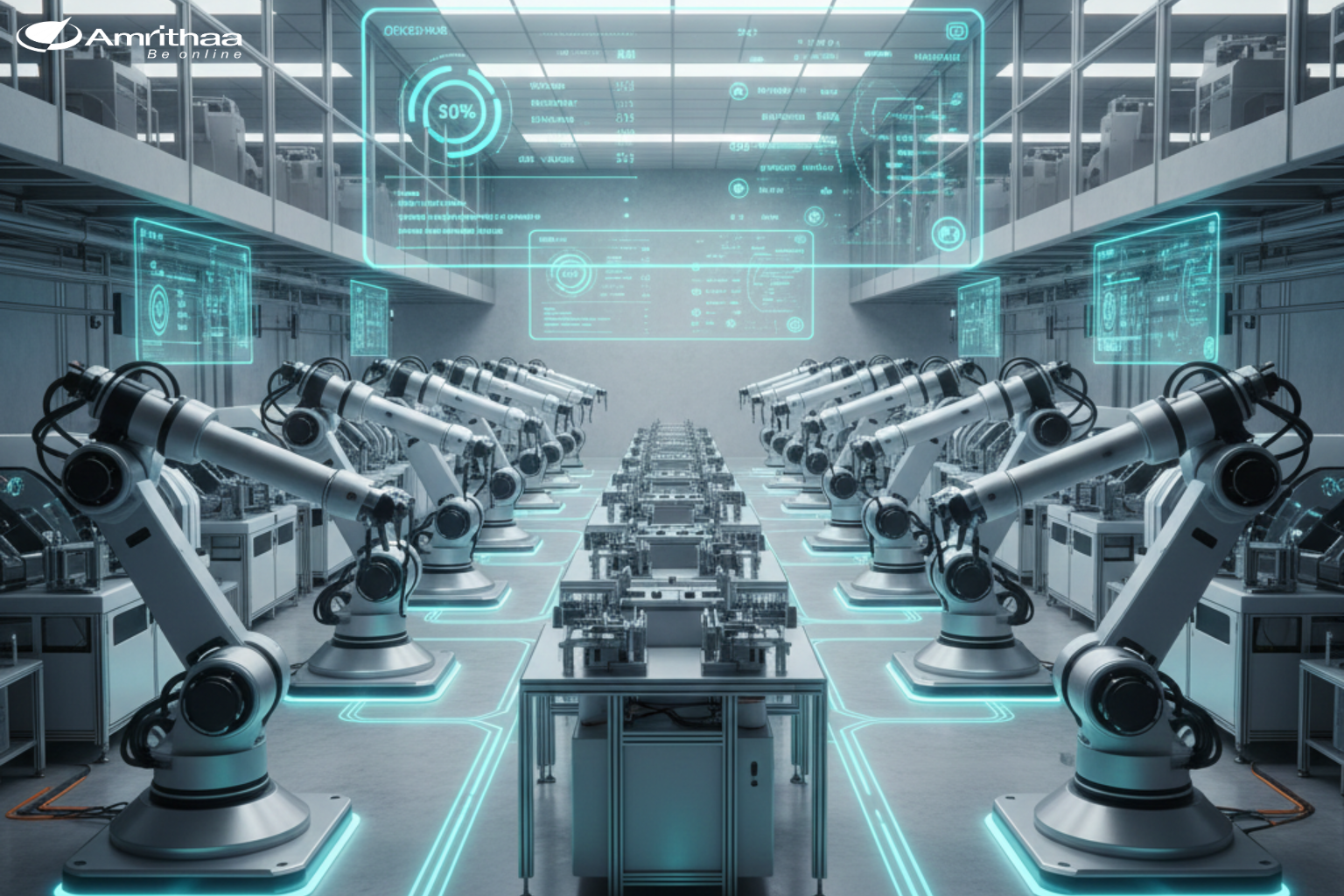
Manufacturing is no longer just about heavy machines, labor teams, and manual supervision. Today’s factories are digital ecosystems where data flows in real time, and processes run with precision. Workflow automation has become the fastest route for manufacturing units to reduce operational inefficiencies, boost production, and scale sustainably. With increasing competition, shifting customer expectations, and supply chain volatility, automation offers manufacturers a reliable roadmap to stay relevant. Platforms like amrithaa.com are helping enterprises accelerate this digital transformation without disrupting existing operations.
Traditional workflows in manufacturing often rely on human intervention. Operators record production, supervisors approve materials, quality teams manually inspect outputs, and managers collate reports. Each step introduces delays, errors, or missing data.
Key pain points include:
Over time, these inefficiencies add up hurting margins, timelines, and customer trust. Modern workflow automation solves these gaps by making processes smart, digital, and synchronized.
Automation starts by identifying recurring activities that drain time or manpower.
Examples of high-impact automation in factories:
Instead of waiting for approvals or manual entries, software systems coordinate between machinery and teams. Platforms like amrithaa.com support digital workflow orchestration, ensuring that each process triggers the next automatically. That means fewer delays, faster production cycles, and predictive planning.
Inventory management is where many units lose money. Human-led purchase tracking often leads to missed updates or over-ordering. Automated workflows solve this through continuous digital monitoring.
Practical use cases:
The beauty of automation is transparency. Procurement teams always know what’s available, what is pending, and where stock is moving. It prevents warehouse pile-ups and unexpected shortages, strengthening financial planning and supply chain resilience.
Quality is the heartbeat of manufacturing. But manual checklists and inspector notes can introduce inconsistency. Automation ensures uniform, standards-driven monitoring.
Automation brings structure across QC, including:
Using digital platforms, manufacturers can track quality issues to their origin production line, material lot, or operator shift—making root-cause resolution faster and more accurate.
Reactive maintenance wastes time and increases costs. Machines break down unexpectedly, production stops, and teams scramble. Workflow automation shifts factories from reactive to preventive.
Predictive maintenance examples:
Instead of “repair after failure,” manufacturers plan “service before disruption.” This prolongs equipment lifespan, protects production flow, and saves revenue.
Automation isn’t about replacing people it’s about empowering them. Staff work smarter with digital assistance, not harder with manual repetition.
Human-centered benefits include:
Digital dashboards replace chaotic spreadsheets. Teams collaborate seamlessly, whether on the production floor or in management offices.
Platforms like amrithaa.com design workflows around people, ensuring training, adoption, and smooth transition into digital ecosystems.
Workflow automation is the future of manufacturing—bringing precision, consistency, and speed. From scheduling and inventory to quality control and predictive maintenance, automation removes friction and builds long-term operational stability. Instead of firefighting problems, manufacturers focus on innovation, scaling, and customer satisfaction.
If you want to transform your manufacturing workflows with digital intelligence, visit amrithaa.com and start your automation journey today.
Ready to build a smart factory? Explore automation-driven solutions at amrithaa.com and unlock efficiency.