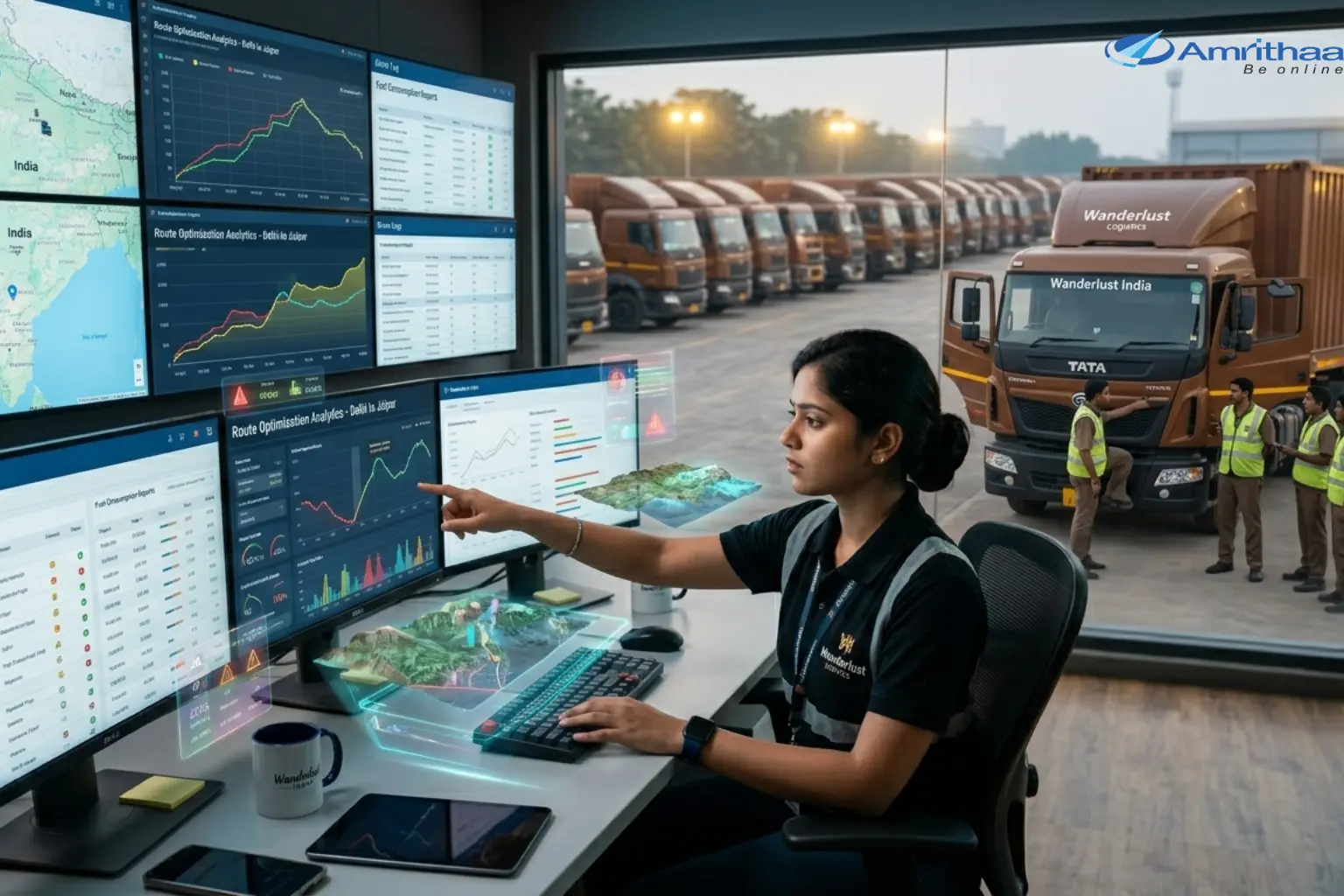
Managing a fleet efficiently is one of the biggest challenges for logistics companies, transport businesses, and delivery services. From vehicle tracking and fuel monitoring to driver management and maintenance scheduling, manual operations can quickly become complex and time-consuming. That’s why businesses are increasingly investing in a modern fleet management system.
A smart fleet management system helps companies streamline operations, reduce costs, improve productivity, and enhance customer satisfaction. Whether you run a small transport company or a growing logistics business, understanding the features of a modern fleet management system can help you choose the right solution for long-term success.
A fleet management system is a digital platform designed to monitor, manage, and optimize vehicle operations in real time.
It helps businesses:
According to experts at amrithaa.com, adopting fleet management technology allows businesses to improve operational efficiency and gain better control over transportation activities.
One of the most important features of a modern fleet management system is GPS vehicle tracking.
This feature allows businesses to:
Real-time tracking improves transparency and helps businesses provide accurate updates to customers.
Fuel costs are a major expense for transport businesses. Modern fleet systems help reduce these costs through intelligent route optimization.
Benefits include:
Advanced systems can also monitor fuel usage and detect unusual fuel consumption patterns.
Businesses working with amrithaa.com often implement route optimization tools to improve efficiency and profitability.
Drivers play a crucial role in fleet operations, and monitoring driver behavior is essential for safety and performance.
Modern systems can track:
This helps improve safety standards, reduce accidents, and encourage responsible driving behavior.
Unexpected vehicle breakdowns can lead to delays and financial losses. A fleet management system helps prevent this through automated maintenance scheduling.
Features include:
Regular maintenance improves vehicle lifespan and reduces downtime.
Modern fleet management systems provide powerful analytics and reporting tools.
These reports help businesses analyze:
Data-driven insights help business owners make smarter decisions and improve overall performance.
Today’s fleet systems are designed for flexibility and accessibility.
Cloud-based platforms allow managers to:
This ensures better communication and faster decision-making.
Experts at amrithaa.com recommend cloud-based systems for businesses looking for scalable and future-ready solutions.
Implementing the right system provides several long-term benefits:
Small and medium-sized transport companies can compete more effectively by leveraging digital fleet technology.
Before investing, consider the following:
Starting with essential features and scaling gradually is often the best approach.
The transportation and logistics industry is rapidly evolving, and businesses must adopt smarter technologies to stay competitive. Understanding the features of a modern fleet management system helps companies improve efficiency, reduce costs, and deliver better customer experiences.
From GPS tracking and route optimization to analytics and maintenance management, these systems are transforming how fleets operate in the digital era.
For expert fleet management solutions and digital transformation services, visit amrithaa.com and modernize your transport operations today.
👉 Ready to optimize your fleet operations? Upgrade to a modern fleet management system and drive your business forward!