The manufacturing industry is undergoing a major transformation driven by digital technology and automation. Businesses that once relied heavily on manual processes are now adopting automation systems, robotics, and smart manufacturing software to improve efficiency, reduce costs, and remain competitive.
In today’s fast-paced industrial environment, automation is no longer a luxury it has become a necessity. From production lines to inventory management and quality control, automation enables manufacturers to streamline operations and scale production effectively.
Technology consulting platforms like amrithaa.com help manufacturing companies adopt automation strategies that align with their business goals. By implementing the right digital solutions, manufacturers can significantly improve productivity and operational performance.
Let’s explore why automation has become essential for modern manufacturing companies.
One of the biggest advantages of automation is the ability to improve production efficiency. Automated machines and systems can perform repetitive tasks faster and more accurately than manual labor.
Automation systems help manufacturers:
Unlike manual operations, automated systems maintain consistent performance and reduce delays caused by human errors or fatigue.
With the right technology integration, manufacturing companies can achieve higher production capacity while maintaining quality standards.
Maintaining consistent product quality is a major challenge in manufacturing. Manual processes often lead to variations that affect product standards.
Automation helps solve this issue by introducing precision-driven manufacturing processes.
Automated systems can perform tasks such as:
These systems ensure that every product meets predefined quality standards.
By implementing automation technologies recommended by amrithaa.com, manufacturers can maintain high-quality production while minimizing defects and waste.
Although automation requires an initial investment, it significantly reduces operational costs in the long run.
Automation helps businesses save money through:
Automated systems can operate 24/7 with minimal supervision, allowing manufacturers to maximize productivity.
In addition, automation improves energy efficiency and reduces material waste, contributing to long-term cost savings.
Manufacturing environments often involve hazardous tasks such as handling heavy equipment, operating machinery, or working with dangerous materials.
Automation helps reduce workplace risks by allowing machines and robots to perform high-risk tasks.
Examples include:
By reducing human involvement in dangerous operations, companies can create safer work environments for their employees.
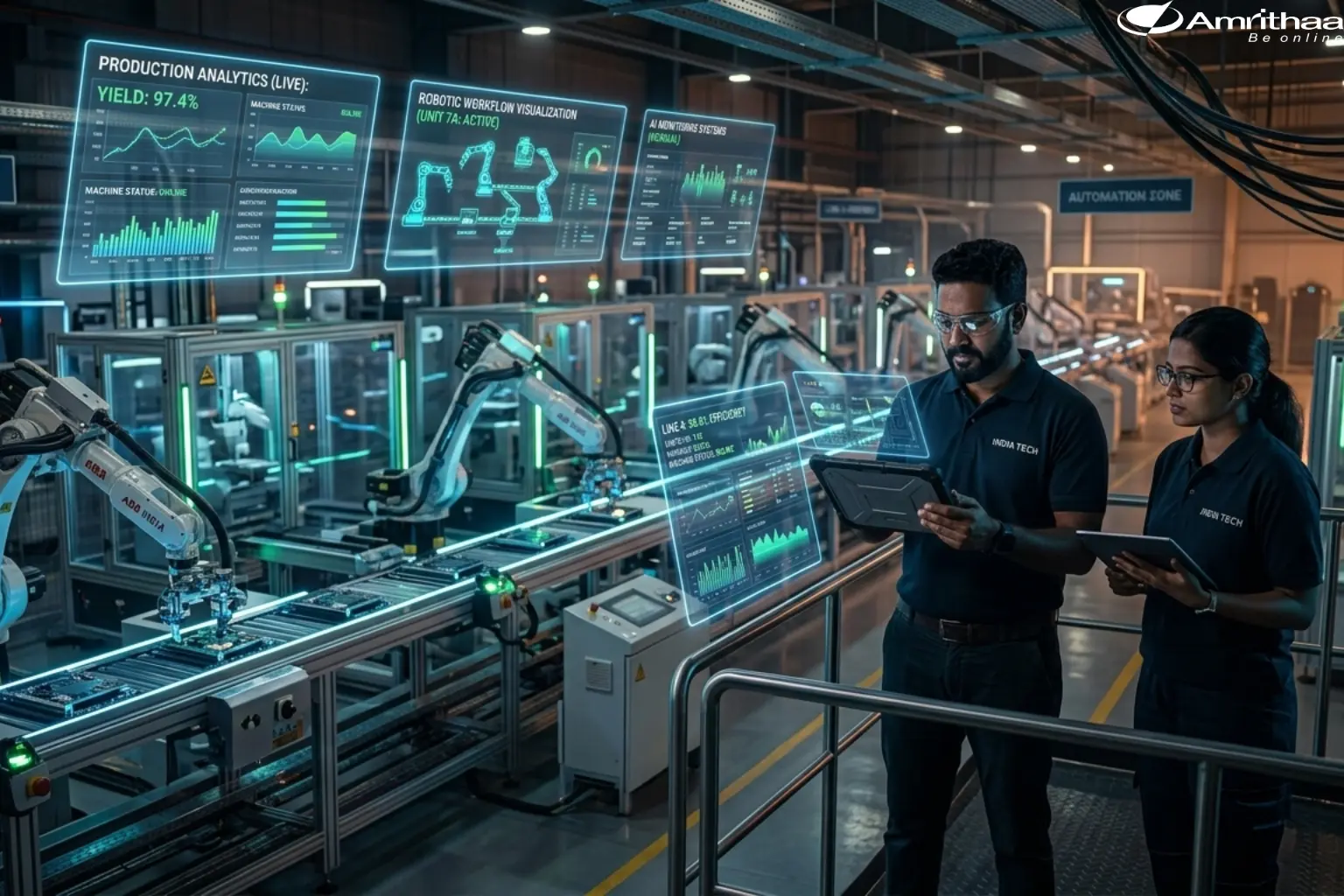
Modern manufacturing automation systems are powered by data analytics and digital monitoring tools.
These systems provide valuable insights such as:
With real-time data, manufacturing companies can identify inefficiencies and optimize production strategies.
Digital dashboards and analytics platforms help managers make smarter business decisions based on accurate information.
Technology platforms like amrithaa.com help manufacturers design data-driven automation systems that support long-term growth.
The cost of implementing automation in manufacturing depends on the scale of operations, required technology, and integration complexity.
Many companies begin with a Minimum Viable Product (MVP) approach by automating specific processes before expanding automation across the entire factory.
Building a digital automation platform or manufacturing software may require a team such as:
This team structure helps ensure smooth implementation and system performance.
An MVP automation system may include essential features such as:
This allows manufacturers to evaluate system effectiveness before scaling further automation.
Automation system development typically involves several stages:
1. Research and Planning
2. System Design
3. MVP Development
4. Testing and Optimization
5. Deployment and Scaling
Automation systems must be scalable and flexible to support future industrial growth.
This is where amrithaa.com provides complete consulting services from cost estimation and MVP strategy to designing automation-driven business models for manufacturing companies.
Automation is transforming the manufacturing industry by improving productivity, reducing operational costs, and enhancing product quality.
Companies that invest in automation gain a significant competitive advantage by optimizing production processes and using data-driven insights to improve decision-making.
From robotic production lines to smart analytics dashboards, automation helps manufacturers operate more efficiently in today’s digital economy.
If your manufacturing company is planning to implement automation solutions, amrithaa.com offers expert consulting for cost planning, MVP development, and scalable automation business models.
Visit amrithaa.com today and start your smart manufacturing journey.