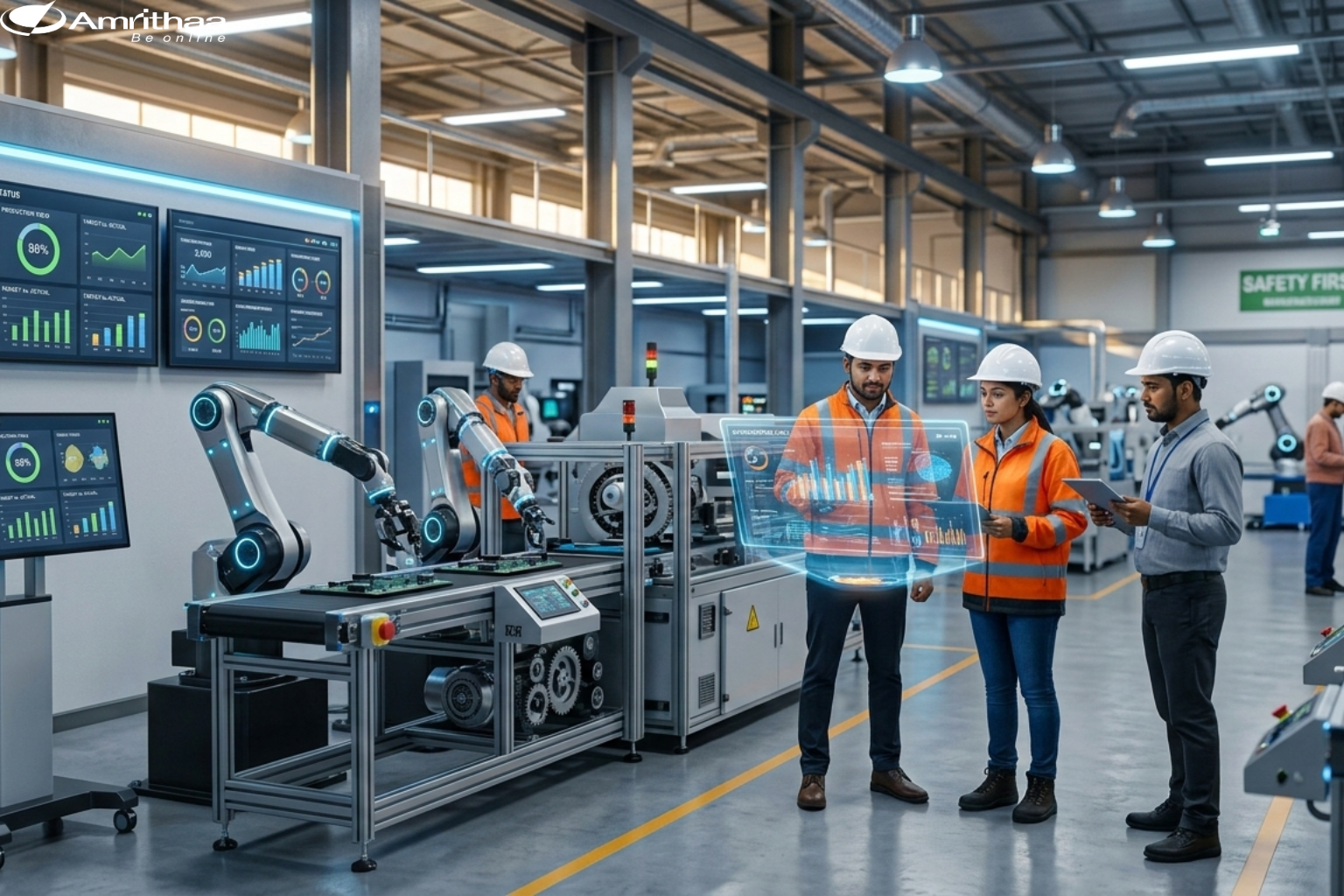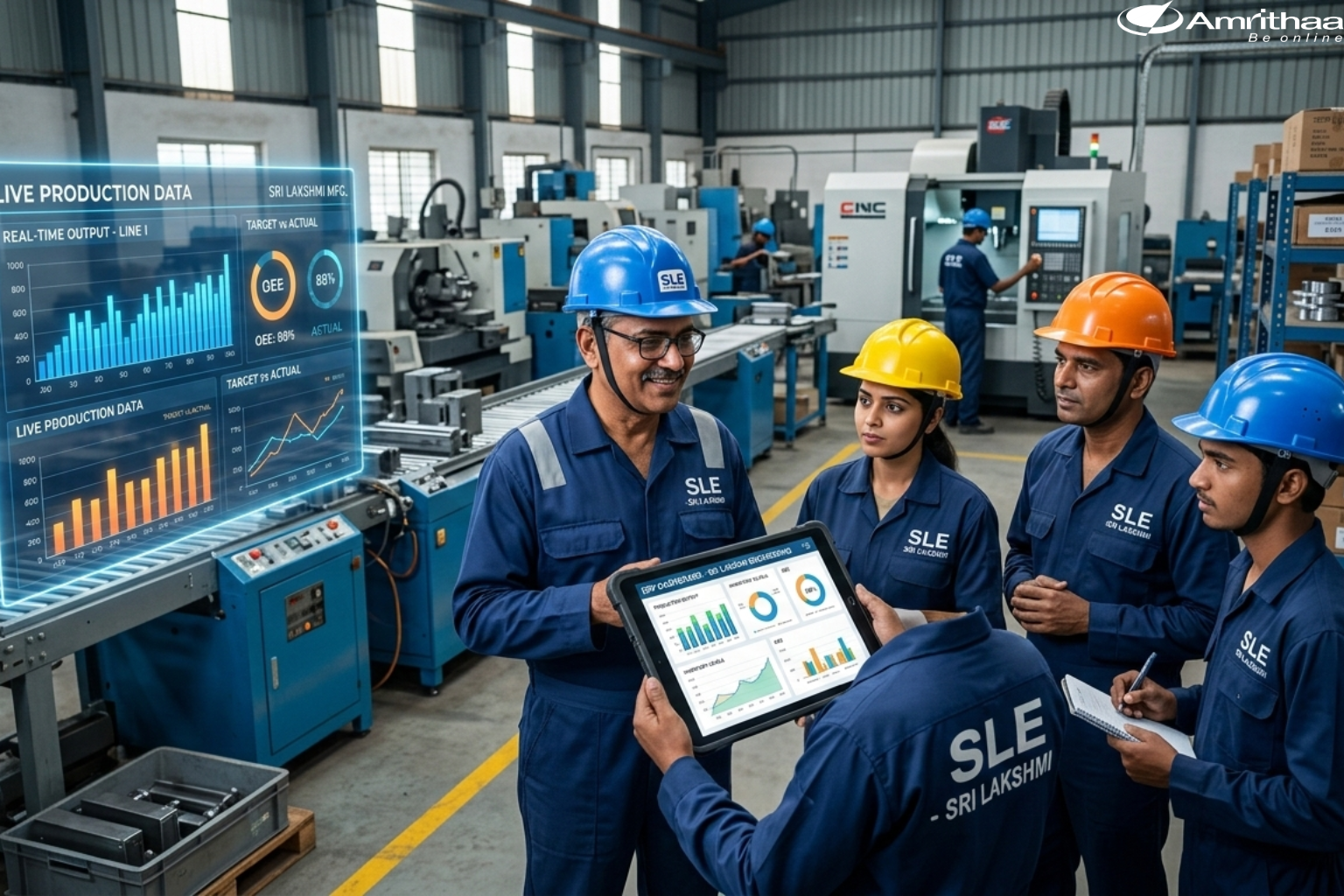
Small manufacturing companies often struggle with scattered data, manual tracking, delayed reporting, and inventory confusion. As competition increases and customer expectations grow, relying on spreadsheets and disconnected systems is no longer sustainable.
This is where ERP software becomes a game changer. Understanding the benefits of ERP software for small manufacturing companies can help business owners streamline operations, reduce costs, and scale efficiently.
ERP (Enterprise Resource Planning) integrates production, inventory, finance, HR, and sales into one centralized system. Instead of managing different tools, everything works together in real-time improving accuracy and decision-making.
Let’s explore how ERP delivers real value, including cost considerations, team size requirements, MVP development, and key phases and milestones.
One of the biggest benefits of ERP software for small manufacturing companies is centralized data management.
ERP systems allow you to:
With real-time dashboards, business owners can instantly see stock levels, machine output, and pending orders. This reduces errors and eliminates duplicate data entry.
Milestone 1:
✔ Complete data migration
✔ Centralized reporting system
✔ Reduction in manual errors
This foundation improves operational clarity and prepares the company for scalable growth.
Inventory mismanagement is one of the biggest cost leaks in small factories.
ERP software helps:
Production planning becomes more accurate because ERP connects sales forecasts with manufacturing schedules.
Milestone 2:
✔ Automated stock alerts
✔ Improved production efficiency
✔ Reduced wastage
With expert consulting from amrithaa.com, small manufacturers can choose the right ERP modules based on their production model and cost structure.
Many small business owners assume ERP is expensive and only for large enterprises. That’s not true anymore.
For small manufacturing companies:
A lean 3–5 member implementation team is sufficient during the initial phase.
ERP cost depends on:
Small-scale ERP implementation may start with a controlled MVP approach to minimize cost risk.
Instead of implementing full ERP at once, companies can:
Milestone 3:
✔ MVP live within 60–90 days
✔ Controlled implementation cost
✔ Early ROI visibility
Strategic planning from amrithaa.com ensures ERP investment aligns with business goals and cost efficiency.
ERP provides strong financial transparency.
Benefits include:
This allows business owners to understand where money is being spent and where savings can be optimized.
Milestone 4:
✔ Automated financial reports
✔ Tax-ready documentation
✔ Improved profit visibility
With structured financial data, manufacturers can make confident expansion decisions.
ERP prepares small manufacturers for long-term growth.
As the company expands:
ERP enables digital transformation without disrupting operations.
Phases and Milestones Overview:
Phase 1: Requirement Analysis & Planning
Phase 2: MVP Implementation
Phase 3: Full Module Integration
Phase 4: Optimization & Automation
Each milestone reduces inefficiency and increases profitability.
Small manufacturers often worry about:
The solution is phased deployment and proper training. When ERP is introduced step by step, employees adapt quickly and productivity improves significantly.
The benefits of ERP software for small manufacturing companies go beyond automation. It builds a structured, transparent, and scalable operational ecosystem.
ERP is no longer optional for small manufacturing companies aiming to compete in today’s market. It enhances efficiency, improves financial control, reduces wastage, and supports scalable growth.
By implementing ERP in structured phases with clear milestones and a cost-controlled MVP approach, manufacturers can achieve strong ROI without overwhelming their resources.
If you are planning ERP adoption and need clarity on team size, cost models, or implementation roadmap, amrithaa.com provides complete consulting support from cost planning to business model optimization.
👉 Ready to modernize your manufacturing operations? Connect with amrithaa.com today and take the first step toward smart manufacturing success.