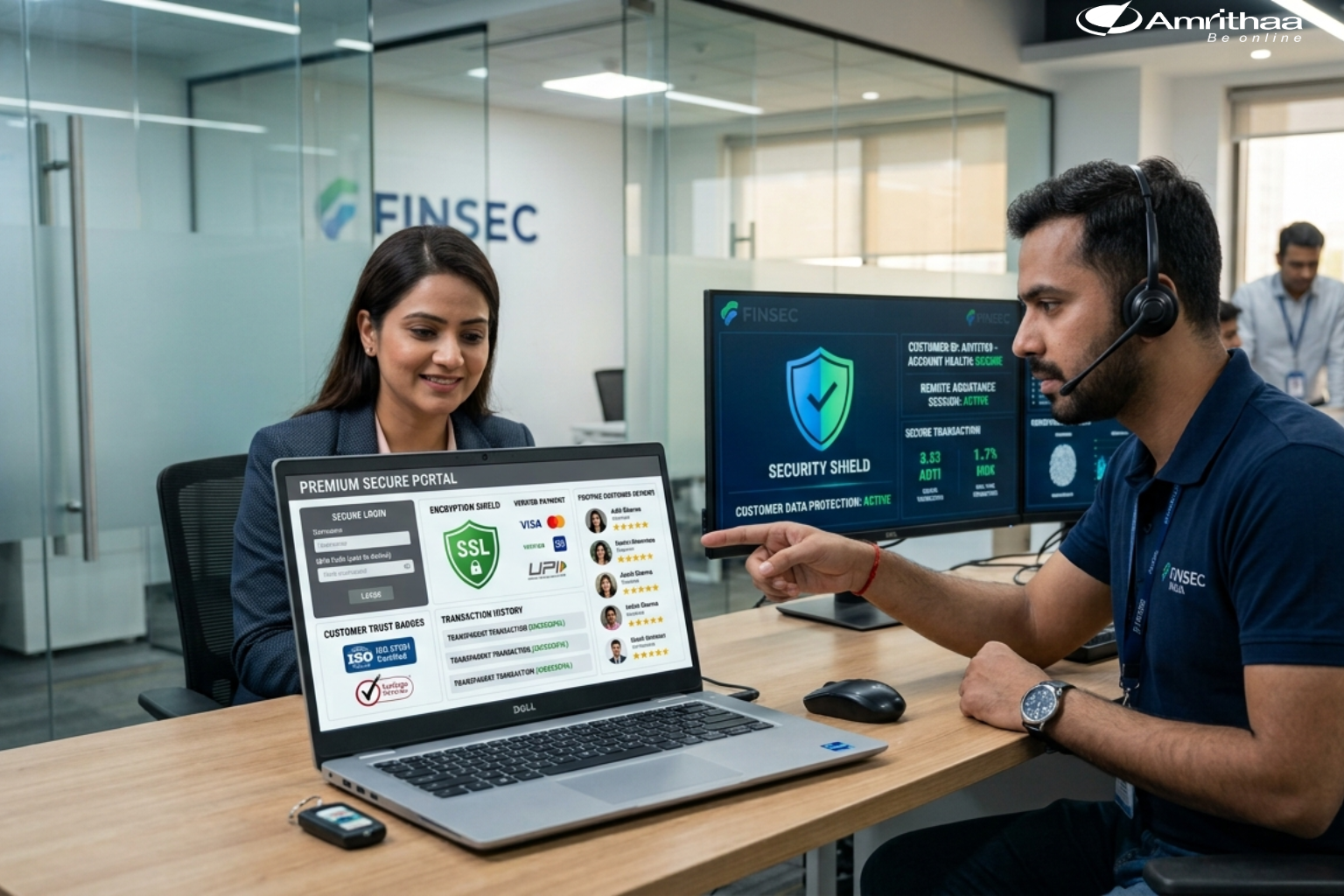
In today’s digital economy, financial web applications have become the backbone of banking, insurance, investment platforms, digital wallets, and online payment systems. These applications handle highly sensitive customer information, including personal details, banking credentials, and financial transactions. As cyber threats continue to evolve, securing financial web applications is no longer optional—it’s a business necessity.
Organizations that prioritize cybersecurity not only protect customer data but also build trust, comply with regulations, and safeguard their reputation. At amrithaa.com, we help businesses develop secure, scalable, and future-ready financial software solutions that meet modern security standards.
Financial applications are among the most targeted platforms for cybercriminals. Attackers continuously look for vulnerabilities to steal customer data, manipulate transactions, or disrupt services.
A single security breach can result in:
Implementing strong security measures from the development stage significantly reduces these risks.
User authentication is the first line of defense against unauthorized access.
Best practices include:
Adding multiple layers of authentication makes it much harder for attackers to compromise user accounts.
Financial data should remain protected whether it is stored or transmitted.
Organizations should:
Proper encryption ensures that even if attackers gain access, the information remains unreadable.
At amrithaa.com, secure data handling practices are integrated throughout the software development lifecycle to deliver reliable financial applications.
Cybersecurity is an ongoing process—not a one-time implementation.
Businesses should regularly perform:
Real-time monitoring helps detect suspicious activities before they escalate into serious security incidents.
Automated alerts and logging systems also improve incident response times and minimize potential damage.
Modern financial applications rely heavily on APIs for payment gateways, banking services, identity verification, and analytics.
To secure APIs:
Regularly reviewing external integrations reduces the risk of supply chain attacks.
Outdated software is one of the easiest entry points for hackers.
Organizations should:
An effective patch management strategy significantly reduces exposure to known vulnerabilities.
Every employee and application should only have access to the resources necessary for their role.
This includes:
Limiting permissions helps prevent insider threats and minimizes damage if an account becomes compromised.
Financial web application security requires continuous planning, implementation, monitoring, and improvement. From strong authentication and encryption to regular testing and secure API management, every security layer contributes to protecting customer information and maintaining business continuity.
Investing in cybersecurity today protects your business tomorrow. Whether you’re building a banking platform, fintech application, insurance portal, or payment solution, following these best practices will help create secure and trustworthy digital experiences.
Looking for secure financial software development? Visit amrithaa.com to build reliable, scalable, and highly secure financial web applications tailored to your business needs.