The real estate industry is rapidly adopting digital technologies to improve property management, tenant communication, and operational efficiency. From managing rental payments to tracking maintenance requests, property managers now rely on digital platforms to streamline daily operations.
One of the most effective solutions is a Property Management Mobile App. These apps allow property owners, real estate agencies, and property managers to manage properties, tenants, and finances from a single platform.
However, one common question arises: What is the cost to develop a property management app?
The answer depends on several factors such as app features, development complexity, technology stack, and team size. Understanding these elements helps businesses plan their investment and development roadmap effectively.
Let’s explore the main factors that influence the cost to develop a property management app.
The cost of developing a property management app depends largely on the features included in the platform.
Basic property management apps typically include:
More advanced apps may include:
As the feature set becomes more advanced, the development cost increases due to additional coding, integrations, and testing requirements.
Another major factor affecting cost is the development team size requirement.
A typical development team for a property management app may include:
For startups or small real estate companies, a lean MVP team can include:
This smaller team helps reduce initial development costs while delivering a functional application.
For many startups and real estate businesses, launching an MVP (Minimum Viable Product) is the most cost-effective approach.
An MVP focuses on essential features that allow businesses to launch quickly and test the platform in real-world scenarios.
Typical MVP features may include:
Once the MVP is launched and feedback is collected from users, additional features such as advanced analytics, automation tools, and integrations can be added.
The MVP strategy offers several advantages:
Many successful real estate technology platforms begin with this approach.
4. Development Phases and Milestones
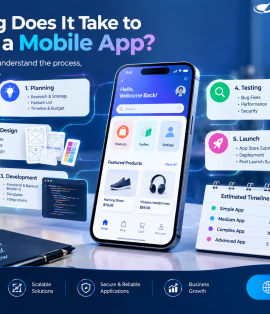
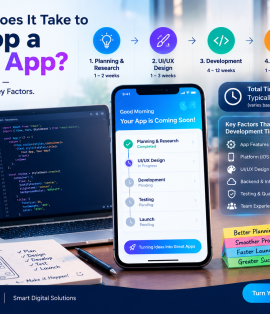
Developing a property management app involves several structured phases. Proper milestone planning ensures smooth development and budget control.
In this stage, the business goals, feature list, and system architecture are defined.
Milestone: Finalized product roadmap and technical plan.
Designers create wireframes and prototypes to ensure an intuitive user experience.
Milestone: Approved app design and workflow.
Developers build the mobile application and backend infrastructure.
Milestone: Working MVP version of the property management app.
Quality assurance teams test the app for bugs, performance issues, and security vulnerabilities.
Milestone: Stable and secure application ready for launch.
The app is launched on app stores and continuously improved with updates and feature enhancements.
Milestone: Live system with monitoring and analytics.
Following these milestones helps businesses control development costs and maintain project timelines.
Beyond the initial development cost, property management apps require ongoing investments to ensure long-term success.
These may include:
Planning these costs early helps businesses build sustainable digital platforms.
The cost to develop a property management app depends on several factors including features, development complexity, and team size requirements.
Key cost considerations include:
By starting with an MVP and gradually expanding features, businesses can build powerful property management solutions while managing their budgets effectively.
If you’re planning to develop a property management app, amrithaa.com provides complete consulting services — including cost estimation, team planning, MVP strategy, and scalable real estate business models.
🏢 Ready to digitize your property management system?
Visit amrithaa.com today and start building your real estate technology platform.