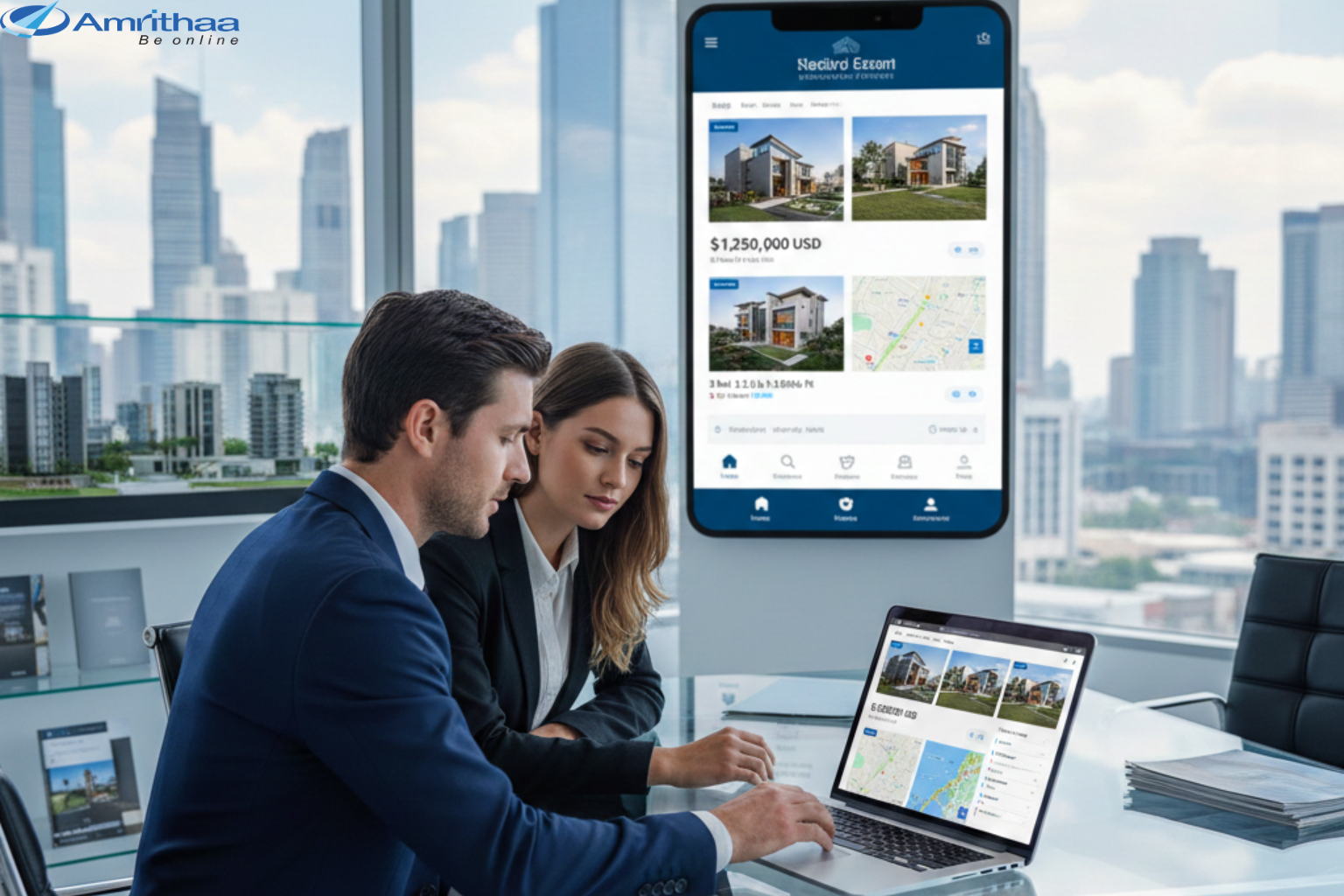
The real estate industry has gone fully digital. Buyers search for properties online. Investors compare listings from their phones. Agents manage inquiries through web platforms. If you’re in the property business, having a Real Estate Listing Website is no longer optional it’s essential.
A professional real estate website combined with a mobile app helps you showcase properties, generate leads, and build trust with potential buyers. But creating a scalable and user-friendly platform requires proper planning, the right technology, and a long-term growth strategy.
Here’s a complete guide to building a powerful real estate listing website.
Before starting development, define your real estate business structure.
Ask yourself:
• Will agents upload their own listings?
• Is it a single-agency platform or multi-agent marketplace?
• Do you need property booking functionality?
• Will you integrate payment gateways?
• Do you plan to launch a mobile app as well?
Your website architecture depends on these decisions.
A clear business model helps reduce development costs and avoids unnecessary features. At amrithaa.com, we start every project with detailed consultation to align technology with business goals.
A successful real estate platform must be visually attractive and technically strong.
The core of the website is property listings.
Each listing should include:
• High-quality images
• Video walkthroughs
• Property description
• Location map integration
• Price details
• Contact information
Advanced filtering options like price range, location, property type, and amenities improve user experience.
Your platform should include role-based access.
Buyers can:
• Save favorite properties
• Schedule site visits
• Contact agents directly
• Receive alerts
Agents can:
• Add or edit listings
• Manage inquiries
• Track leads
• View performance analytics
This structured system keeps operations organized and professional.
Today, most property searches happen on smartphones. That’s why combining your website with a mobile app gives you a strong competitive advantage.
A real estate mobile app should offer:
• Push notifications for new listings
• Instant chat with agents
• Easy property search
• GPS-based location filtering
At amrithaa.com, we develop integrated website and mobile app solutions that work seamlessly across devices.
Real estate is highly visual. Your platform must look modern, premium, and easy to navigate.
Key design elements include:
• Clean layout
• High-resolution property images
• Fast loading speed
• Clear call-to-action buttons
• Mobile responsiveness
Avoid cluttered pages. Simplicity increases engagement.
A professional UI/UX design builds credibility and encourages users to spend more time browsing listings.
A Real Estate Listing Website handles:
• User data
• Contact details
• Agent information
• Payment details (if applicable)
Security measures should include:
• SSL encryption
• Secure login authentication
• Admin-level access control
• Cloud hosting
• Regular backups
Scalability is also important. As your property listings grow, your system must handle increased traffic without slowing down.
Choosing the right technology stack ensures long-term stability.
To stand out in the real estate market, consider adding:
• Virtual property tours
• AI-based property recommendations
• Mortgage calculator integration
• Multi-language support
• CRM integration for lead tracking
• SEO-optimized property pages
Search engine optimization is especially important. Each property page should be optimized with keywords like location, property type, and pricing to improve visibility on Google.
A structured development roadmap helps control cost and timelines:
Feature mapping
Platform architecture design
Cost estimation
Wireframes
Responsive layouts
User flow design
Backend development
Frontend implementation
Mobile app development
API integrations
Performance testing
Security validation
Bug fixing
Cloud deployment
SEO optimization
Ongoing updates
At amrithaa.com, we provide end-to-end real estate website and mobile app development tailored to your business model and growth plans.
Creating a Real Estate Listing Website is about more than just uploading properties. It’s about building a digital ecosystem that connects buyers, sellers, and agents efficiently.
With the right features, modern design, secure infrastructure, and mobile app integration, your real estate platform can generate consistent leads and long-term growth.
If you’re ready to build a powerful and scalable real estate listing website with mobile app integration, expert guidance makes the difference.
👉 Visit amrithaa.com today and start building your digital real estate platform.